
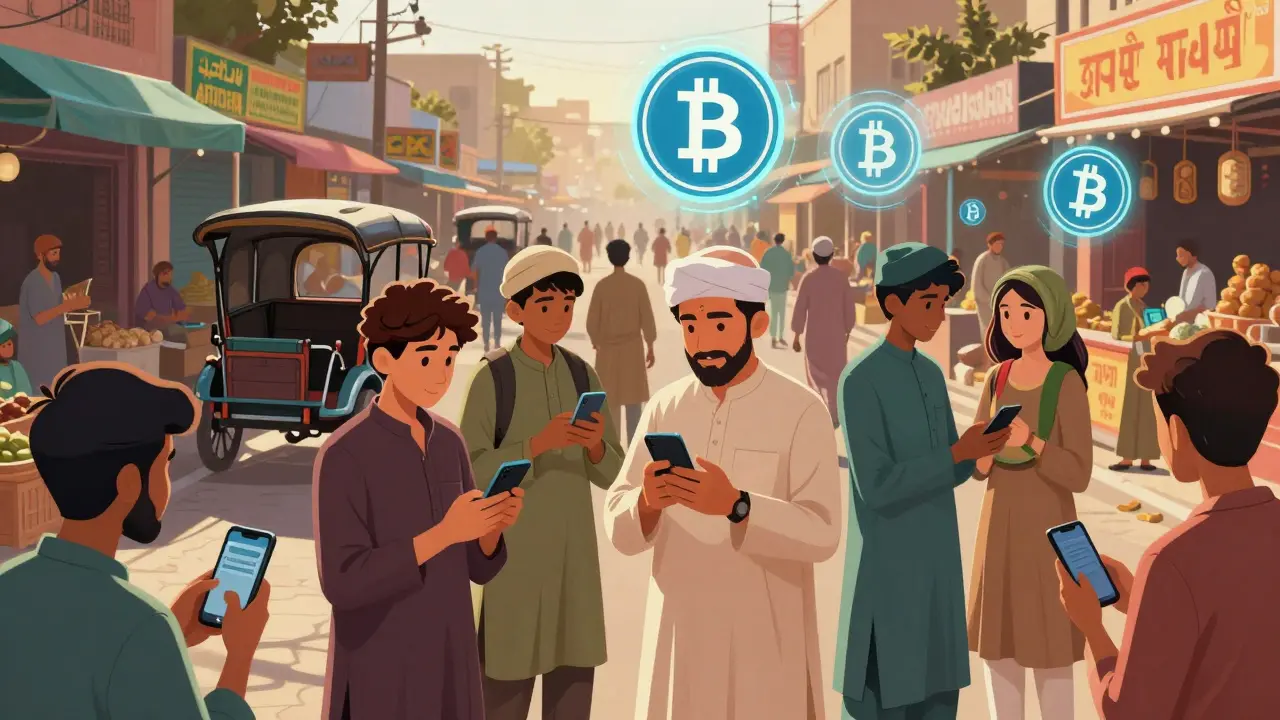
It sounds counterintuitive. For years, the State Bank of Pakistan treated cryptocurrency like a contagion. In 2018, they declared it illegal tender and banned banks from processing transactions. Yet, by late 2025, Pakistan is ranked 3rd globally in cryptocurrency adoption, trailing only India and the United States.
This isn't a glitch in the data. It’s a story of necessity meeting opportunity. While governments debated regulations, millions of ordinary Pakistanis turned to digital assets to survive economic instability. Now, the government has finally caught up, pivoting from prohibition to promotion with startling speed.
The Numbers Behind the Ranking
To understand where Pakistan stands, we have to look at how "adoption" is measured. The gold standard for this data comes from Chainalysis's Global Crypto Adoption Index. In their October 2025 report, Pakistan jumped six spots to land firmly in 3rd place.
But rankings can be tricky depending on who is counting. Another analysis from May 2025 placed Pakistan at 9th. Why the difference? Chainalysis looks at transaction volume adjusted for purchasing power parity (PPP). This means they measure how much value people are actually moving through crypto networks relative to what things cost locally. Other indices might focus purely on ownership rates or speculative trading volume.
| Ranking Source | Pakistan's Rank | Key Metric Focus |
|---|---|---|
| Chainalysis (Oct 2025) | 3rd | Transaction Volume & PPP Adjusted |
| Alternative Analysis (May 2025) | 9th | Ownership Rates & Speculative Activity |
Regardless of whether you call it 3rd or 9th, the scale is massive. Approximately 20 million Pakistanis now hold digital currencies. That represents a market valued between $20 billion and $25 billion. With a total population of 230 million, this penetration rate far exceeds the global average of 6.9% seen in 2024. You aren't just seeing tech-savvy teenagers buying Bitcoin here; you are seeing families using crypto as a core part of their financial survival strategy.
From Ban to Bureau: The Regulatory Flip-Flop
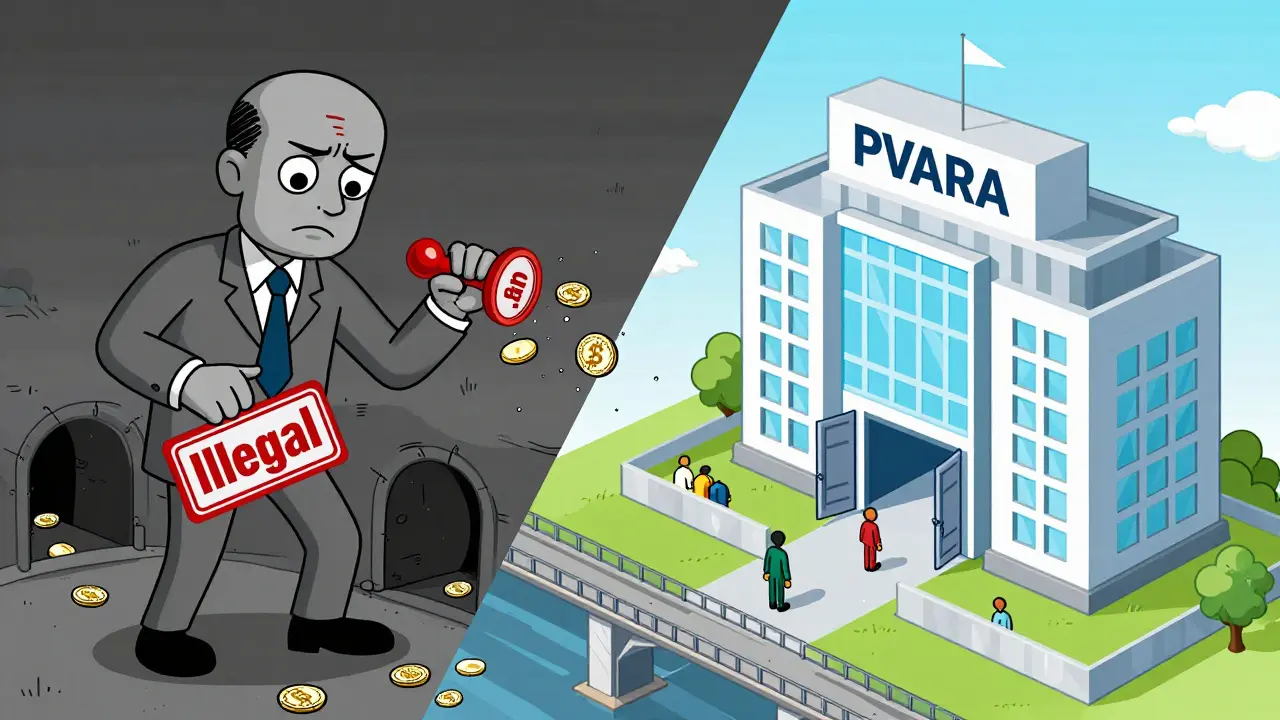
The most dramatic shift hasn't been in user behavior-it's been in policy. For nearly a decade, the regulatory environment was hostile. If you tried to buy crypto through a bank account, your funds could be frozen. This pushed the entire market underground, forcing users to rely on peer-to-peer (P2P) platforms and informal networks.
Then, in 2024 and 2025, the tide turned completely. The government realized that banning crypto didn't stop its use; it just stopped the state from taxing or regulating it. The pivotal moment came in July 2025 with the establishment of the Pakistan Virtual Assets Regulatory Authority (PVARA). This body was created to provide legal clarity, something the industry had desperately needed.
Simultaneously, the Pakistan Crypto Council was formed, led by CEO Bin Saqib. This council acts as a bridge between the government, private sector players, and international partners. It signals a high-level political commitment to integrating blockchain into the national economy rather than fighting it.
This reversal is crucial. Without PVARA, institutional investors would never touch the Pakistani market. With it, the door is open for regulated exchanges, custodial services, and potentially even local crypto issuance. The shift from "illegal" to "regulated" is what allowed Pakistan to climb so sharply in the Chainalysis rankings.
Utility Over Hype: Why Pakistanis Use Crypto
If you ask a trader in New York why they buy crypto, they might talk about decentralization or store of value. If you ask a merchant in Lahore, the answer is usually simpler: inflation and remittances.
Kim Grauer, Chief Economist at Chainalysis, noted that adoption in emerging markets is driven by utility. Specifically, she pointed out that stablecoins are transforming how people manage money in volatile economies. In Pakistan, where the rupee has faced significant depreciation pressure, holding savings in US Dollar-pegged stablecoins like Tether (USDT) offers protection against currency devaluation.
Consider the remittance angle. Pakistan relies heavily on money sent home by workers abroad. Traditional banking channels are slow and expensive, often charging fees that eat up 5-7% of the transfer. Crypto enables near-instant transfers with fractions of that cost. A worker in Dubai can send USDT to a family member in Karachi, who can then cash it out via a local P2P platform within minutes. This practical utility drives daily active usage, which boosts adoption metrics more effectively than occasional speculative trades.
- Inflation Hedge: Citizens convert local currency to stablecoins to preserve purchasing power.
- Cheaper Remittances: Families receive money faster and cheaper than through Western Union or banks.
- Cross-Border Trade: Small businesses use crypto to pay for imports without navigating complex forex approvals.
Geopolitics and High-Stakes Partnerships
Pakistan's crypto strategy isn't happening in a vacuum. It's deeply intertwined with geopolitics, particularly relations with the United States. Throughout 2025, high-level discussions took place involving Finance Minister Muhammad Aurangzeb and prominent figures like Michael Saylor of MicroStrategy. These talks focused on using cryptocurrency to build financial resilience and attract foreign investment.
However, not all partnerships are straightforward. In August 2025, the Pakistan Crypto Council signed an agreement with World Liberty Financial, an entity associated with the Trump family. This deal aims to accelerate blockchain adoption in Pakistan but has raised eyebrows regarding conflicts of interest. Zach Witkoff, a co-founder of World Liberty Financial and son of Steve Witkoff (Trump's Special Envoy to the Middle East), secured direct access to top Pakistani officials, including Army Chief Asim Munir and Prime Minister Shehbaz Sharif.
This dynamic introduces a layer of complexity. On one hand, these connections bring capital and technical expertise. On the other, they tie Pakistan's regulatory framework to the interests of external private actors and shifting US political landscapes. Critics worry that prioritizing profit-driven partnerships over robust consumer protection could lead to volatility down the line.

Challenges and Risks Ahead
Despite the impressive rankings, Pakistan faces significant hurdles. The rapid pivot from ban to regulation leaves gaps in consumer protection laws. Scams and fraud remain rampant in the unregulated corners of the P2P market. Many new users lack the financial literacy to distinguish between legitimate projects and pump-and-dump schemes.
Furthermore, the reliance on external partners creates dependency risks. If the geopolitical wind shifts, or if the promised investments from entities like World Liberty Financial fail to materialize as expected, the momentum could stall. The success of Pakistan's crypto journey depends on maintaining the utility-driven focus-helping people save, send, and spend money-rather than letting speculative bubbles dominate the narrative.
Infrastructure also needs to keep pace. Internet connectivity issues and electricity load-shedding can disrupt trading activities. Ensuring that the underlying tech stack is resilient enough to support 20 million users is no small feat.
What This Means for the Future
Pakistan's rise to the top tier of global crypto adoption is a testament to human ingenuity under pressure. When traditional systems fail to protect wealth or facilitate easy movement of funds, people find alternatives. The government's eventual embrace of this reality has legitimized a parallel economy that was already thriving.
Looking ahead to 2026 and beyond, Pakistan is well-positioned to maintain its top-10 status. The combination of a large, young population, improving regulatory clarity via PVARA, and strong utility drivers creates a solid foundation. However, the country must navigate the delicate balance between innovation and stability. If regulators can enforce strict compliance while fostering growth, Pakistan could become a model for other emerging markets. If they prioritize short-term gains over long-term security, the current boom could turn into a bust.
For now, the message is clear: Crypto in Pakistan is no longer a fringe activity. It's a mainstream financial tool used by millions to navigate an uncertain world. And with the right guardrails, it might just help stabilize that world.
Is cryptocurrency legal in Pakistan in 2026?
Yes, as of 2026, cryptocurrency is regulated and legal in Pakistan. The establishment of the Pakistan Virtual Assets Regulatory Authority (PVARA) in July 2025 marked the end of the previous ban, providing a legal framework for crypto transactions, exchanges, and investments.
Why does Pakistan rank so high in crypto adoption despite past bans?
Pakistan ranks highly because adoption was driven by necessity rather than speculation. Economic instability, high inflation, and the need for cheaper remittances led millions of citizens to use crypto for practical financial management. The recent regulatory changes have simply formalized this existing widespread usage.
What is the role of the Pakistan Crypto Council?
The Pakistan Crypto Council serves as an industry coordination body that facilitates dialogue between the government, private sector participants, and international partners. Led by CEO Bin Saqib, it aims to integrate cryptocurrency into the national economy and promote blockchain technology adoption.
How do stablecoins benefit Pakistani users?
Stablecoins, such as USDT, allow Pakistani users to protect their savings from local currency inflation by holding assets pegged to the US Dollar. They also enable faster and cheaper cross-border remittances compared to traditional banking methods, reducing fees and transfer times significantly.
Are there risks associated with the new crypto partnerships?
Yes, partnerships with external entities like World Liberty Financial raise concerns about conflicts of interest and dependency on foreign political interests. There is a risk that prioritizing profit-driven motives over robust consumer protection could lead to market volatility or regulatory arbitrage.
So the government banned it for years, let the black market flourish, and now they want to tax it? Typical. The State Bank of Pakistan probably thinks slapping a logo on a scam will make it legit. I’m watching this with zero trust.
i think its really sad that people have to turn to crypto just to survive inflation though. my cousin in lahore says the rupee is so weak she barely gets anything from her brother in dubai anymore. hope the new rules help regular families not just big investors
you see what happens when you try to control money. the state fails so the people adapt. it is not about tech it is about freedom from the leash. pvara is just a fancy name for a leash made of gold chains instead of iron but still a leash
I find it fascinating how the narrative has shifted from 'illegal tender' to 'national economic pillar' in such a short timeframe, especially considering the regulatory body PVARA was only established in July 2025. It seems that the government finally realized that prohibition merely drives activity underground where it cannot be monitored or taxed, whereas regulation allows for oversight and revenue generation, which is undoubtedly why we are seeing this rapid adoption rate surge to third place globally according to Chainalysis metrics.
World Liberty Financial? Trump family? This is obviously a setup to destabilize the region under the guise of innovation. They are using Pakistan as a testbed for their global dominance strategy while the rest of us are distracted by price charts. The army chief meeting with Witkoff is a huge red flag that military interests are being tied up with private US political agendas. Wake up people this is not about financial freedom it is about geopolitical leverage and data harvesting on millions of unsuspecting users who think they are just sending remittances cheaper
If you are going to use stablecoins for remittances, make sure you understand the counterparty risk involved with centralized issuers like Tether. Just because it is pegged to the dollar does not mean it is safe from seizure or de-pegging events during times of extreme stress. Educate yourself before you move your life savings into a digital wallet.
The integration of blockchain infrastructure into emerging markets like Pakistan represents a paradigm shift in cross-border liquidity management. By leveraging PPP-adjusted transaction volumes, we can observe a genuine utility-driven adoption curve rather than speculative frenzy. The establishment of PVARA provides the necessary regulatory sandbox for institutional-grade custody solutions, thereby reducing friction for FDI inflows and enhancing the overall financial ecosystem's resilience against fiat currency volatility.
Look at the numbers. 20 million users. That is not hype, that is survival. If your local currency loses value every day, holding USDT is the only logical choice. The government banning it didn't stop people, it just made them vulnerable to scams. Now with PVARA, there is at least some framework. Still risky, but better than nothing.
glad to see pak getting serious bout this. lots of potential if they keep the scams away. good luck everyone out there trying to save their cash from inflation
This is huge for the whole South Asian region! 🚀 Seeing Pakistan jump to #3 shows that when traditional banking fails, people innovate. The synergy between remittance flows and stablecoin utility is exactly what we need to discuss more. Let's support each other across borders and build a more inclusive financial future together! 💪
as an indian i can relate to the pain of forex restrictions. pakistan moving fast is impressive. hope they dont mess it up like some other countries did with heavy handed bans earlier. the p2p market is wild but necessary till proper rails are built. good job to those navigating it 👍
While Pakistan's adoption rates are statistically significant, one must consider the broader regional implications for India. Our own regulatory stance remains cautious, prioritizing consumer protection over rapid expansion. The reliance on external entities such as World Liberty Financial raises valid concerns about sovereignty and data security that should not be overlooked by neighboring nations observing this trend.
It is imperative to scrutinize the involvement of politically connected entities in the formation of national financial infrastructure. The association with individuals linked to foreign political administrations suggests a potential compromise of national autonomy in favor of private gain. Such arrangements often lack transparency and may serve ulterior motives beyond mere technological advancement, warranting intense skepticism from informed citizens.
the irony is palpable isnt it. they banned it then embraced it. it reminds me of historical cycles where suppression leads to underground flourishing then eventual co-option by the very powers that tried to crush it. but who really benefits? the masses or the elites who now get to take a cut? i doubt anyone here is thinking critically enough to see past the shiny blockchain facade
I’ve been tracking the P2P spreads in Karachi and they’re actually tightening up since the PVARA announcement. It’s cool to see the market maturing. People aren’t just gambling; they’re using it for real stuff like paying for imports and saving against inflation. It’s messy but it’s working.
i wonder if the average person knows how to secure their keys properly. with 20 million users entering the space many might fall victim to phishing or fake exchanges. education is key here otherwise all this adoption could lead to massive losses for ordinary folks
let me tell you something about these rankings. chainalysis adjusts for purchasing power parity which basically means they are manipulating the data to make developing nations look like crypto hubs. its a narrative tool. the reality is most of these transactions are small scale survival tactics not sophisticated trading. and the government is playing right into the hands of western firms who want to monetize this desperation. typical neoliberal playbook
Haha, welcome to the club! 😂 First ban, then embrace, then regulate. Classic move. At least now they can tax the gains. Hope the common man doesn't get crushed by the fees though. Keep smiling and stay safe out there! 😉