
You might have heard whispers about the Biconomy Exchange Token (BIT) airdrop. Maybe you missed it, or maybe you’re just curious how these campaigns actually work behind the scenes. The truth is, the main event for the BIT token launch happened back in April 2022. It wasn’t a simple "click here to get free money" button. It was a strategic move by Biconomy Exchange, a cryptocurrency trading platform that wanted to build loyalty and boost user engagement.
If you are looking to claim free BIT tokens today, I need to be straight with you: the primary airdrop window has closed. However, understanding exactly how that campaign unfolded gives you a masterclass in how modern crypto exchanges distribute assets. It also helps you spot similar opportunities in the future. Let’s break down what happened, how the math worked, and where the BIT token stands in the market now.
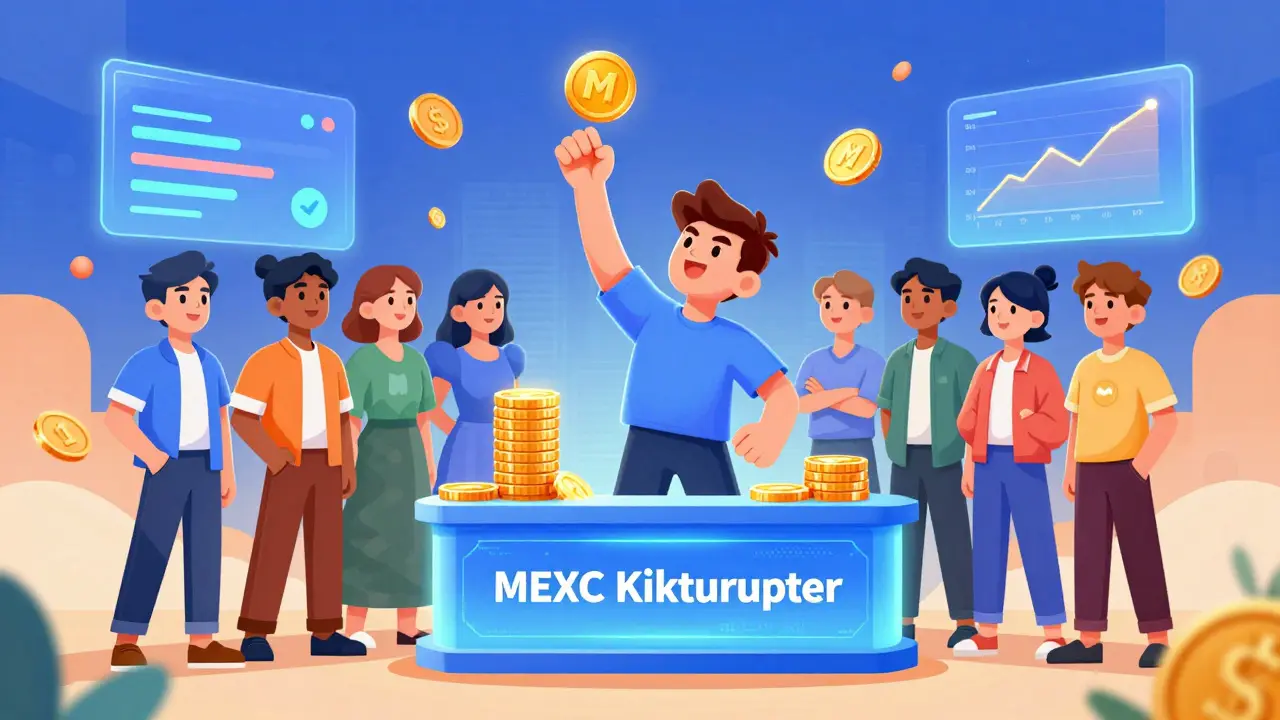
The Core Mechanism: MEXC Kickstarter Voting
The heart of the BIT distribution wasn’t a random giveaway. It was tied to the MEXC Kickstarter program. This is a feature on the MEXC Global exchange that allows projects to raise awareness and liquidity by letting users vote with their own holdings. For BIT, this meant participants had to stake MX Tokens, the native utility token of the MEXC exchange.
Here is how the process played out for those who participated:
- The Staking Requirement: You couldn’t just show up. You needed between 10 and 500,000 MX tokens staked in your account. This created a barrier to entry, ensuring that only serious traders were voting.
- The Lock-Up Period: During the voting window, your MX tokens were temporarily locked. This prevented people from buying votes last minute and dumping them immediately after. The tokens unlocked within an hour of the event ending.
- Proportional Rewards: The more MX you staked, the more votes you cast. The reward pool was split based on the total votes each participant contributed. If you held 1% of the total votes, you got roughly 1% of the rewards.
This structure is common in the industry. It aligns the interests of the exchange, the project, and the voters. But did it pay off? That depends on the numbers.
The Numbers Behind the 2022 Campaign
To understand the scale, we need to look at the specific figures released during the campaign. These aren't estimates; they were hard-coded into the contract and announced publicly.
| Metric | Value / Detail |
|---|---|
| Voting Period | April 9, 2022 (02:00 UTC - 10:50 UTC) |
| Trading Start | April 9, 2022 (13:00 UTC estimated) |
| General Reward Pool | 1,600,000,000 BIT Tokens |
| Affiliate Reserve | 800,000,000 BIT Tokens (Top 500 affiliates) |
| Reference Price | $0.00001355 USDT |
| Minimum Stake | 10 MX Tokens |
Notice the reference price: $0.00001355. That was the initial valuation set for the distribution. Today, the price hovers around $0.000010 USD. While the unit price seems low, remember that crypto markets are volatile. The real value came from the sheer volume distributed-2.4 billion tokens in total. This massive supply was designed to ensure wide distribution rather than concentrating wealth in a few early wallets.
Utility: What Can You Actually Do With BIT?
Airdropped tokens are useless if they don’t have a purpose. Biconomy didn’t just dump tokens; they built a utility model around them. The BIT token is a BEP20-compliant asset running on the Binance Smart Chain. This means it’s compatible with wallets like Trust Wallet and MetaMask, and it can be traded on decentralized exchanges.
Within the Biconomy ecosystem, holding BIT offers several perks:
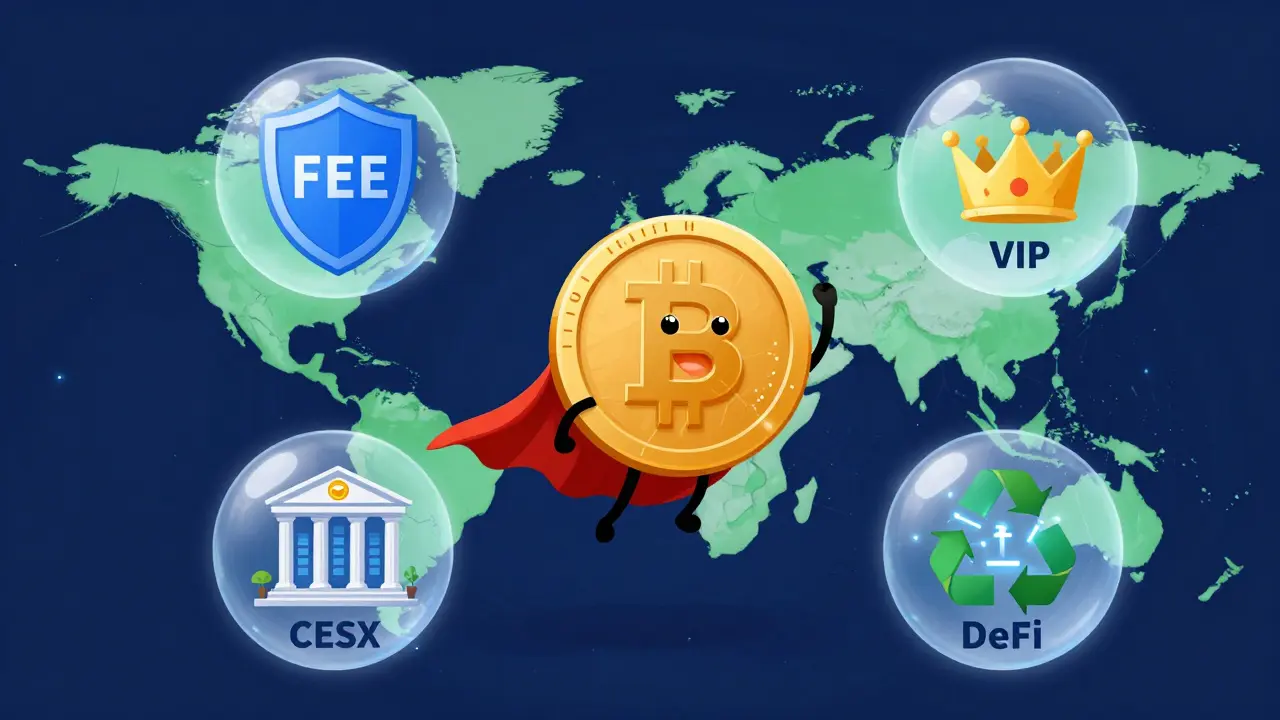
- Fee Discounts: Traders can use BIT to reduce commission fees on the exchange. This is the most direct financial benefit.
- VIP Status: You can purchase monthly VIP plans using BIT. Higher VIP tiers often come with lower fees and better customer support.
- Governance Voting: Holders get a say in certain exchange decisions. This turns passive holders into active stakeholders.
- Buyback Rewards: The exchange promised seasonal buybacks, rewarding long-term holders when the team repurchased tokens from the market.
This multi-layered approach is smart. It keeps the token circulating instead of sitting dead in wallets. If you hold BIT, you are incentivized to keep using the exchange to maximize your benefits.
Beyond Centralized Exchanges: The PancakeSwap Connection
The MEXC campaign wasn’t the only move. Biconomy also pushed into the decentralized finance (DeFi) space. They launched a separate $50,000 BIT token distribution campaign linked to their listing on PancakeSwap, one of the largest DEXs on Binance Smart Chain.
Why does this matter? Because it shows a dual-strategy. By being on MEXC, they captured traditional traders who prefer centralized interfaces. By being on PancakeSwap, they reached DeFi natives who trust smart contracts over corporate entities. This diversification helps stabilize the token’s liquidity. Even if one exchange faces issues, the other provides a safety net for trading.
Current Market Reality: Is BIT Still Relevant?
Let’s talk about the present. As of mid-2026, the BIT token trades with a daily volume of around $655,000 USD. It ranks #3823 on CoinMarketCap. That’s not a top-tier position, but it’s not zero either. There is still activity.
However, there is a caveat. Development updates have slowed down. Public roadmaps are sparse, and recent codebase commits are minimal. This suggests the project is in a maintenance phase. The infrastructure works-the fees discount, the voting functions-but there isn’t a loud marketing machine driving new users in right now.
For investors, this means BIT is a low-volatility, low-profile asset. It won’t likely moon overnight. But for existing holders, the utility remains intact. The exchange is operational, and the token serves its intended purpose within that specific ecosystem.
Lessons for Future Airdrop Hunters
If you missed the BIT airdrop, don’t sweat it. Use it as a case study. Here is what you should look for in future campaigns:
- Staking Requirements: Always check if you need to lock up other assets (like MX tokens) to qualify. Calculate if the potential reward outweighs the opportunity cost of locking your capital.
- Token Utility: Before participating, ask: "What can I do with this token?" If it’s just a meme coin with no use, sell it immediately. If it has fee discounts or governance rights, consider holding.
- Liquidity Sources: Check if the token is listed on multiple platforms. A token only on one obscure exchange is risky. A token on both CEXs and DEXs (like BIT) is safer.
The crypto landscape moves fast. New airdrops pop up weekly. By understanding the mechanics of past events like the BIT launch, you position yourself to act quickly and wisely next time.
Can I still claim the BIT token airdrop in 2026?
No, the primary airdrop campaign through MEXC Kickstarter concluded in April 2022. Any claims made after that period are likely scams. The token is currently available for purchase on various exchanges.
What is the current price of the BIT token?
As of mid-2026, the BIT token trades at approximately $0.000010 USD. Prices fluctuate based on market demand and trading volume across exchanges like MEXC and PancakeSwap.
How do I store BIT tokens safely?
Since BIT is a BEP20 token on the Binance Smart Chain, you can store it in any wallet that supports BSC networks, such as Trust Wallet, MetaMask, or SafePal. Ensure you keep your seed phrase private and never share it.
Is Biconomy Exchange a legitimate platform?
Yes, Biconomy Exchange is an operational cryptocurrency trading platform. It has integrated its native BIT token for fee discounts and governance. However, always conduct your own due diligence before depositing funds into any exchange.
Why did the BIT token price drop from its reference price?
The reference price of $0.00001355 was an initial valuation metric for the airdrop. Post-launch, market forces of supply and demand determined the actual trading price. Like many altcoins, BIT experienced downward pressure as early sellers exited their positions.
These crypto schemes are just a way to steal from the poor. The whole system is rigged by elites who don't care about regular people.
hey guys i think u missed a key point here. the staking requirement was pretty high so only whales really benefited. its not fair for small investors but thats how it goes in crypto world lol
You're all missing the obvious manipulation tactics here. Look at the tokenomics, it's designed to dump on retail traders. I've analyzed similar projects and they always fail because the insiders know when to sell. Stop being naive and look at the code commits which have dried up completely.
Let's keep the discussion respectful everyone. It's important to understand both sides of the blockchain technology debate. While some see it as a scam, others see innovation in decentralized finance protocols. We can learn from this case study regardless of our personal feelings about crypto assets.
Nice breakdown! In India we see many such tokens too. Always check liquidity before investing. BSC is good for low fees though :) Hope you find better opportunities next time!
Oh great, another article telling us why we lost money. Thanks for nothing. Maybe if exchanges weren't run by criminals we wouldn't need these 'educational' posts.
This type of financial speculation has no place in serious economic development. Countries that regulate these activities properly do not suffer from such volatility. The lack of oversight is concerning.
I suspect there is a deeper conspiracy behind these token distributions. They are likely testing new methods of mass surveillance through wallet tracking. Be very careful with your private keys as they may be compromised by government agencies.
The existential dread of holding worthless tokens is profound. We are merely pawns in a digital game designed by algorithms we cannot comprehend. Why do we participate in this madness? Is it greed or fear? The answer lies within the void of the blockchain itself.
I get that people want free money but come on. Just buy coffee instead. It's cheaper and tastes better than regretting bad investment decisions.
Great info here. I wonder if anyone actually made profit after gas fees? Seems like a lot of work for little reward. Good luck to those still holding.
THIS IS A SCAM AND EVERYONE KNOWS IT. The developers are laughing at you while they cash out. Wake up sheeple! You are being played like a fiddle by these tech bros who don't give a damn about your retirement fund!
Haha nice try bro. Crypto is just gambling with extra steps. But hey if you enjoy losing money go ahead. I'll be over here making actual profits in stocks :)
I feel your pain. My soul is crushed by the weight of my portfolio. Why does the universe hate me? I just wanted to be rich like Elon Musk but now I am poor and sad. Please send help or Bitcoin.
While I appreciate the detailed analysis provided in this post regarding the historical context of the Biconomy BIT token airdrop campaign, I must emphasize that it is crucial for all participants in the cryptocurrency market to conduct thorough due diligence before engaging in any form of speculative trading or investment activity, especially considering the volatile nature of digital assets and the potential risks associated with decentralized finance platforms which often lack regulatory oversight and consumer protection mechanisms that are typically found in traditional financial systems.
Bullish on BSC ecosystem long term. Short term noise doesn't matter. Focus on utility and community building. If you don't understand smart contracts then stay away. DYOR always applies to every single token launch in this space.
The structural integrity of such distribution models relies heavily on initial liquidity provision. Without adequate market depth price discovery becomes inefficient leading to significant slippage for early adopters.