
If you’ve heard about the ByteNext (BNU) airdrop and are wondering whether it’s worth your time, here’s the blunt truth: you’re not alone. Thousands have signed up, hoping to grab free tokens. But with ByteNext trading at nearly zero on most exchanges and its token suspended from major platforms, this isn’t your typical airdrop. This isn’t about getting rich quick. It’s about understanding what you’re really signing up for.
What Is ByteNext (BNU)?
ByteNext is a cryptocurrency token built on the BNB Smart Chain with one clear purpose: to power the AvatarArt platform, a niche NFT marketplace designed for traditional artists who want to turn physical artwork into digital collectibles.
Unlike other NFT projects that focus on pixel art or generative collections, AvatarArt targets painters, sculptors, and illustrators who’ve never touched blockchain before. The idea? Let them upload high-res images of their work, mint it as an NFT, and sell it in virtual 3D galleries - no tech skills needed. That’s where BNU comes in. It’s not just a token. It’s the engine.
The BNU Token’s Six Uses
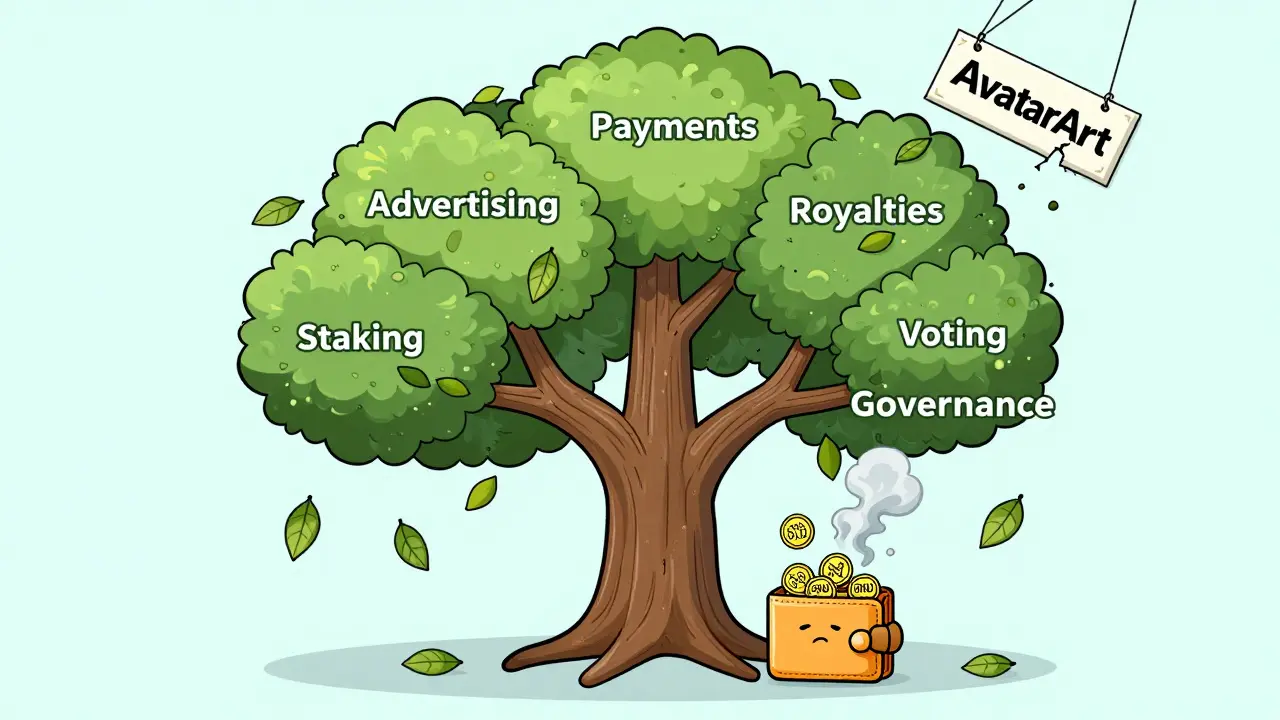
BNU isn’t a meme coin with no function. It has six real roles inside the AvatarArt ecosystem:
- Payments - You pay listing fees, auction bids, and commissions in BNU.
- Advertising - Artists buy premium placement in virtual exhibitions using BNU.
- Author Rights - Every time an NFT sells, a portion of BNU goes to the original creator as royalty.
- Staking & Farming - Holders can lock up BNU or NFTs in liquidity pools to earn rewards.
- Voting - Users vote on which artworks get featured in monthly exhibitions.
- Governance - BNU holders can propose and vote on platform upgrades.
This structure is smart. It ties token value directly to platform activity. But here’s the catch: no one’s using it.
The Airdrop: 25,000 BNU Tokens Explained
The ByteNext 25,000 $BNU tokens Community Airdrop Program is real. It’s not a scam. But details are scarce. Based on past community announcements, here’s what we know:
- 25,000 BNU tokens total are being distributed - not 25,000 per person.
- It’s targeted at artists who joined AvatarArt before October 2025.
- Participants must have connected their wallet and completed at least one NFT upload.
- There’s no deadline listed, but the airdrop appears inactive as of early 2026.
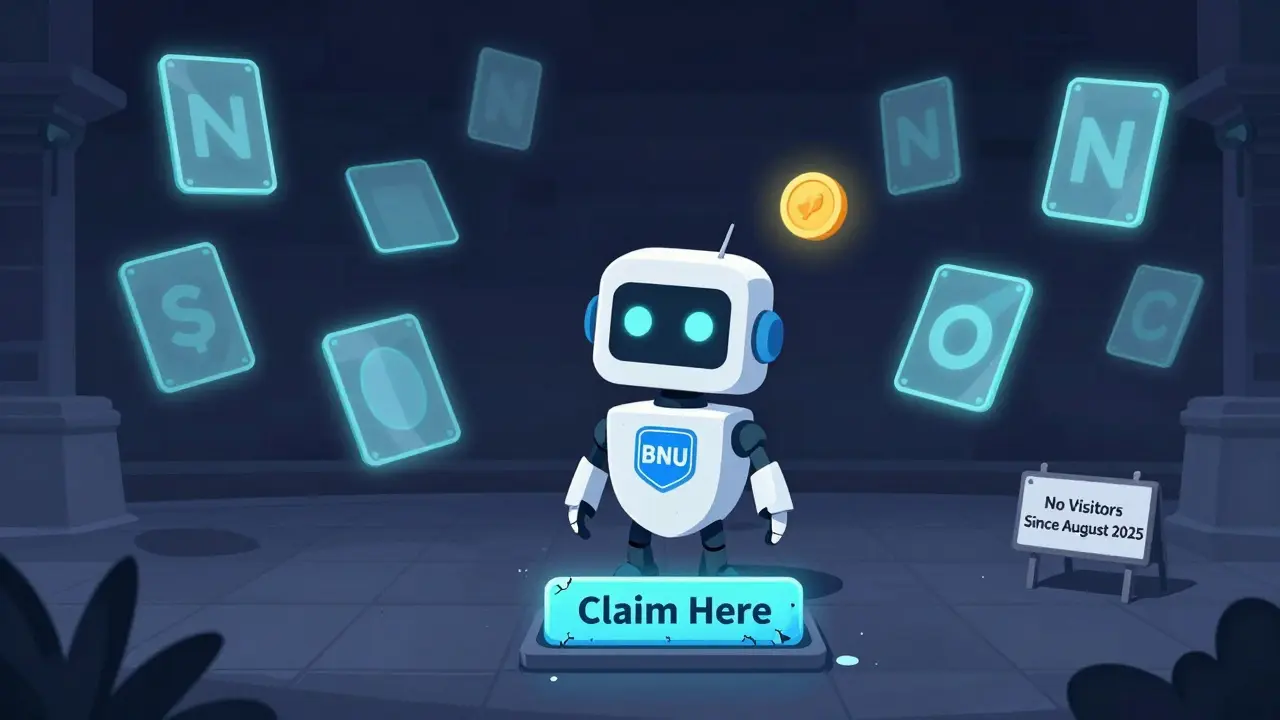
You won’t find a public claim page. No smart contract address to verify. No Twitter thread confirming distribution. That’s not normal. Legit airdrops are loud. This one is silent.
Why Is BNU Trading at Why Is BNU Trading at $0?
?
As of March 2026, BNU is effectively dead on major exchanges:
- CoinGecko removed it 15 days ago - no trading volume, no price.
- CoinMarketCap shows $0.00 price and zero volume.
- Binance lists it as $0.
- Coinbase says it’s worth $0.000603, but volume is $6.36 in 24 hours - that’s less than a coffee.
The token’s all-time high was $0.000741. Today, it’s 99.9% below that. Even if you got 10,000 BNU in the airdrop, you’d be holding $6.03 worth of something no one’s buying. Worse - you can’t even sell it. Exchanges won’t list it. Decentralized swaps won’t pair it. It’s a digital ghost.
Is the AvatarArt Platform Still Active?
Here’s where things get murky. The AvatarArt platform website (bytenext.io) still loads. The GitHub repo has recent commits - mostly bug fixes, no major updates. Twitter and Facebook pages haven’t posted since August 2025. No new artist onboarding announcements. No auction results. No press.
That’s not a platform in decline. That’s a platform that stopped.
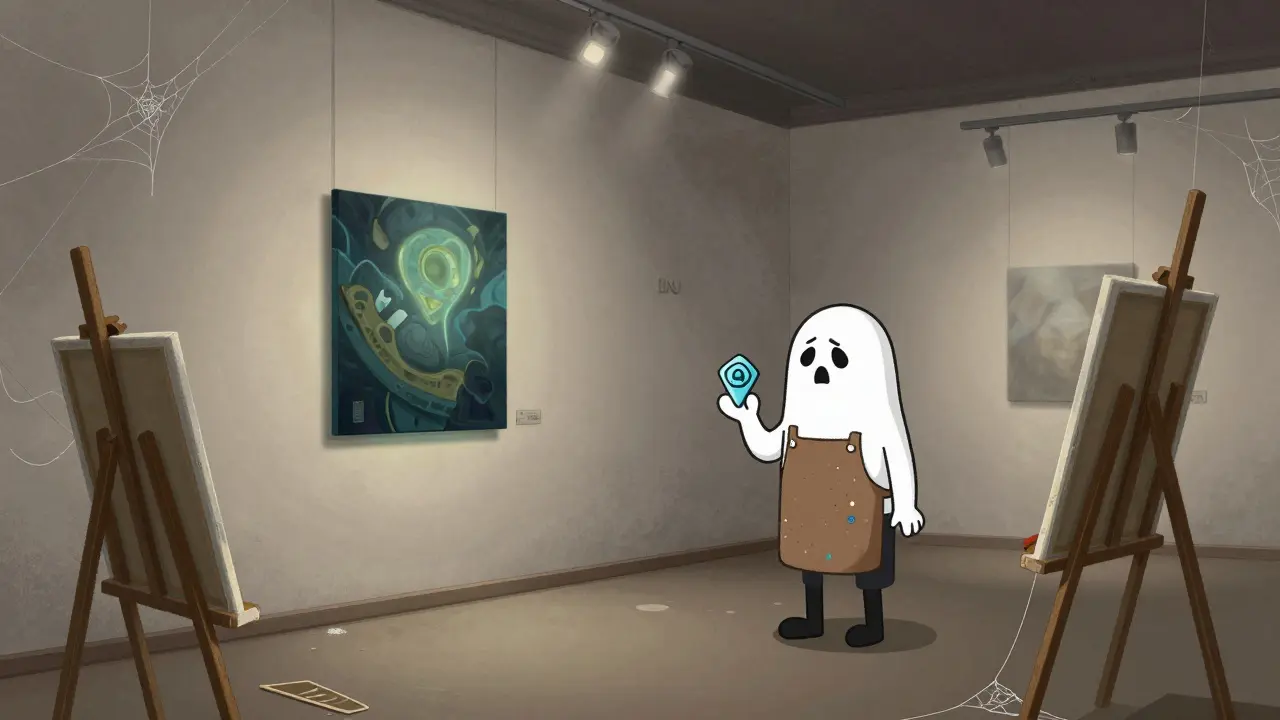
Imagine a gallery that shut its doors but still hangs paintings on the wall. No visitors. No sales. No lights on. That’s AvatarArt right now. The tech works. The concept is solid. But the community vanished. And without users, BNU has no utility - even if the code says it does.
Should You Join the Airdrop?
Here’s the real question: What are you hoping to get?
If you’re hoping to flip BNU for cash - forget it. You can’t. Not now. Not without a miracle.
If you’re an artist who loves the idea of AvatarArt and wants to support its revival - then yes, join. Upload your art. Claim the tokens. Hold them. Maybe, just maybe, the team comes back. Maybe they relaunch the platform. Maybe they get listed again. But that’s a long shot.
If you’re just chasing free crypto - walk away. This isn’t a gift. It’s a gamble on a dead project.
What Happens If You Claim the Tokens?
Let’s say you do claim 500 BNU. What then?
- You’ll have them in your wallet - fine.
- You won’t be able to sell them - true.
- You can’t stake them - the pools are empty.
- You can’t use them to vote - no one’s voting.
- You can’t use them to advertise - no one’s buying ads.
So what’s left? A digital trophy. A file in your wallet labeled "BNU: 500". That’s it.
Some people keep them anyway. Hoping. Believing. Waiting. History is full of tokens that came back from the dead - but they had a team, a roadmap, and users. ByteNext has none of that.
Final Reality Check
ByteNext (BNU) isn’t a failed project. It’s a forgotten one. The airdrop exists, but it’s a relic. The platform has potential. The token had utility. But right now, it’s all frozen.
Participating in the airdrop won’t hurt you. It costs nothing. But don’t fool yourself into thinking you’re getting value. You’re not. You’re getting a piece of digital history - and a lesson in how quickly crypto projects can vanish.
If you’re curious, go to bytenext.io, connect your wallet, and upload one NFT. Claim what’s offered. Then forget about it. Don’t check the price. Don’t wait for a pump. Just move on.
Because in crypto, the biggest risk isn’t losing money. It’s wasting time on something that’s already dead.
Is the ByteNext airdrop still active?
There’s no official confirmation the airdrop is still running. The last public update was in late 2025. No claim page, no distribution logs, and no recent announcements. If you joined before October 2025 and uploaded an NFT, you might be eligible - but there’s no way to verify or claim tokens right now.
Can I sell BNU tokens if I get them?
No. BNU is no longer listed on any major exchange. Trading volume is effectively zero. Decentralized exchanges like PancakeSwap don’t have a trading pair for BNU. Even if you hold the tokens, you can’t convert them to BNB, USDT, or any other currency. They’re essentially non-transferable at this point.
Why did ByteNext stop trading?
The exact reason isn’t public, but the signs point to lack of demand. The AvatarArt platform failed to attract enough artists and buyers. With no trading activity, exchanges delisted BNU. Without liquidity, the token lost all value. The project hasn’t released updates since mid-2025, suggesting development has stalled.
Is ByteNext a scam?
It’s not a scam in the classic sense - there’s no evidence of fraud or stolen funds. The smart contract is real, the platform once worked, and the team published their code. But it’s a failed project. The concept was good, but execution collapsed. It’s now a ghost project with no community or market.
Should I invest in BNU now?
No. Investing in BNU now is not investing - it’s speculation on a resurrection that’s extremely unlikely. With no trading, no updates, and zero community momentum, the odds of recovery are near zero. Treat any BNU you hold as a collectible, not an asset.
Where can I find the ByteNext contract address?
The BNU token contract address on the BNB Smart Chain is 0x4954...0a7b77. You can verify this on BscScan, but be warned: even if you send tokens to this address, you won’t be able to trade or use them. The contract exists, but the ecosystem around it doesn’t.
I uploaded my watercolor last year and never heard back. I thought the airdrop was just dead. Guess I'm holding digital ghost art now. No biggie. At least I didn't pay to join.
Still think it's cool they tried to build something for real artists. Most NFT stuff is just crypto bros playing dress up.
Oh my GOD this is the most obvious rug pull I've seen since the Luna collapse. They didn't even try to hide it. Zero liquidity? No announcements? The team just vanished like they were never real. This isn't a failed project-it's a crime scene. Someone needs to file a complaint with the SEC. Or better yet, start a class action. I'm so mad I even clicked on this post.
While the situation with ByteNext is certainly disappointing, I want to acknowledge the effort behind AvatarArt. The intention to empower traditional artists through blockchain was noble and ahead of its time. Many platforms fail not because the idea is flawed, but because they lack sustainable community-building strategies. Perhaps this could serve as a case study for future projects-emphasizing engagement over tokenomics. The vision still matters.
LMAO so we’re supposed to feel bad for artists who got ‘free tokens’? Bro. You think people are going to buy digital paintings of cats in oil? This whole thing was a vanity project for a dev who thought he could skip marketing and just ‘build it and they will come.’ Nope. Crypto doesn’t work like that. You need hype. You need influencers. You need memes. This was a funeral with no mourners.
The tokenomics were structurally unsound from day one. No liquidity provision, no CEX listings, no staking incentives beyond theoretical utility. The smart contract may be ‘real’ but without economic density, it’s just a static artifact. BNU’s $0 valuation isn’t a bug-it’s a feature of its design. The entire ecosystem was a closed loop with no external value injection. Classic over-engineered failure.
Dead project. Don't claim it.
Wait wait WAIT-this is definitely a government surveillance trap! They’re collecting wallet addresses to track artists who oppose crypto. I bet the ‘AvatarArt’ name is code for something else. Why else would they use BNB chain? That’s all controlled by Binance, and Binance is owned by the CIA. I saw a tweet once. I’m not crazy. Check the contract. It’s got hidden code. I’m telling you-don’t touch it!
I actually uploaded a piece and claimed the tokens. I didn’t expect anything, but I wanted to support the idea. I keep the BNU like a little digital postcard. Kinda sweet, honestly. Like a museum piece. Maybe one day someone will revive it. Or maybe I’ll just show my grandkids ‘this is what crypto felt like in 2025.’ Still better than NFT monkeys.
I’ve been in crypto since 2017 and seen a hundred projects die. This one hurts because it had heart. The platform worked. The interface was clean. Artists were actually using it. I saw testimonials from painters in rural India, from retired illustrators in Ohio. They weren’t chasing money-they were chasing legacy. That’s rare. The team disappeared, sure. But the art’s still there. Maybe that’s the real airdrop. The art lives. The token? Doesn’t matter.
Everyone’s acting like this is some tragic mystery. It’s not. The team was amateurs. The roadmap was fantasy. The marketing? Zero. If you’re an artist and you think ‘free crypto’ is worth your time, you’re the problem. This isn’t charity. It’s a graveyard. Stop romanticizing failure. Just because it ‘meant well’ doesn’t mean it wasn’t garbage.
I’m so mad I even looked into this. I wasted 45 minutes uploading my painting. Now I have 250 BNU sitting in my wallet like a sad emoji. I could’ve been doing literally anything else. Painting. Sleeping. Watching cat videos. But no. I had to believe in a ghost. And now I’m stuck with digital confetti. I hate this.
I don’t get why anyone is surprised. No one ever talked about this. No influencers. No Reddit threads. No YouTube breakdowns. If it’s not on Twitter or TikTok, it doesn’t exist. This wasn’t a project-it was a whisper. And whispers get ignored. I’m not even mad. Just… bored. Next time, make it loud. Or don’t bother.
The real issue here isn’t the token-it’s the governance model. A decentralized platform without active governance is a corpse with a heartbeat. The six utilities listed? All theoretical. No quorum, no proposals, no voting turnout. The contract is just code. Without human participation, it’s inert. This isn’t a liquidity problem. It’s a social problem. The community never formed. And no amount of smart contracts can fix that.
You people are pathetic. You’re clinging to this like it’s a lost puppy. It’s not. It’s a dead horse. And you’re all feeding it scraps because you don’t want to admit you got scammed. Stop pretending this has value. Stop posting about ‘art’ and ‘legacy.’ You didn’t support art-you supported a fantasy. Wake up. This isn’t crypto. It’s a therapy session.
The structural integrity of the ByteNext ecosystem was fundamentally compromised by its lack of external market anchoring. The token's utility was entirely internalized, resulting in a closed-loop system with no external value transfer mechanisms. Consequently, its market valuation collapsed to zero not due to technical failure, but due to economic irrelevance. This is a textbook case of misaligned incentive structures.
I’m not saying you should give up on BNU-but I’m saying don’t wait for it. If you’re an artist, upload your work anyway. Even if no one sees it. Even if the site’s quiet. Art doesn’t need a marketplace to matter. I’ve got 17 pieces up there. I don’t care if the tokens are worthless. They’re still mine. Still real. Still me. That’s the only thing that counts.
I uploaded a piece. Got the tokens. Still have them. I don’t care if they’re worth $0.0006. I got a digital signature on the blockchain. That’s art history now. Maybe one day someone will dig this up and go ‘wow, this was a real artist’s attempt to go Web3 before it got ruined.’ I’m proud. 😎
If you didn’t make a single sale or get a single like on AvatarArt, you were never part of the community. You just wanted free crypto. That’s why it died. No one cared. Not the artists. Not the buyers. Not the devs. Just another ‘build it and they will come’ delusion. Don’t cry when it fails. You were never the audience.