

Most crypto airdrops feel like a gamble. You spend hours clicking buttons, hoping for a payout that might never come, or worse, getting scammed by a fake site. But the Zamio DeFi ecosystem aiming to transfer global equity to decentralized finance approach is different. Instead of vague promises, they have launched specific, partnership-driven campaigns with clear mechanics and real value attached.
If you are looking to get your hands on ZAM tokens the native utility and governance token of the Zamio ecosystem, there are currently two major avenues open: the MEXC Kickstarter voting campaign and the CoinMarketCap NFT drop. This guide breaks down exactly how these work, what it costs to participate, and whether the potential rewards justify the effort in the current market landscape of 2026.
What Is the Zamio Ecosystem?
Before diving into the airdrop mechanics, it helps to understand what you are actually holding. Zamio isn't just another meme coin or a speculative token with no utility. The project has a stated mission to transfer 1% of the world's equity into decentralized finance. That is a massive goal, but it sets the stage for why their tokenomics are structured the way they are.
The ecosystem relies on three distinct assets:
- ZAM Token: The primary governance and utility token. This is what you earn through the airdrops discussed here.
- AEDZ: A stablecoin pegged 1:1 to the Emirati Dirham (AED).
- USDZ: A stablecoin pegged 1:1 to the US Dollar (USD).
This tri-token system is designed to offer stability alongside growth potential. While ZAM handles governance and ecosystem access, the stablecoins allow users to transact without worrying about volatility. For an airdrop recipient, this means the ZAM token has actual use cases within the platform, such as accessing expert-managed investment portfolios or using the safe wallet system that executes transfers via phone numbers rather than complex wallet addresses.
MEXC Kickstarter Campaign: The Main Event
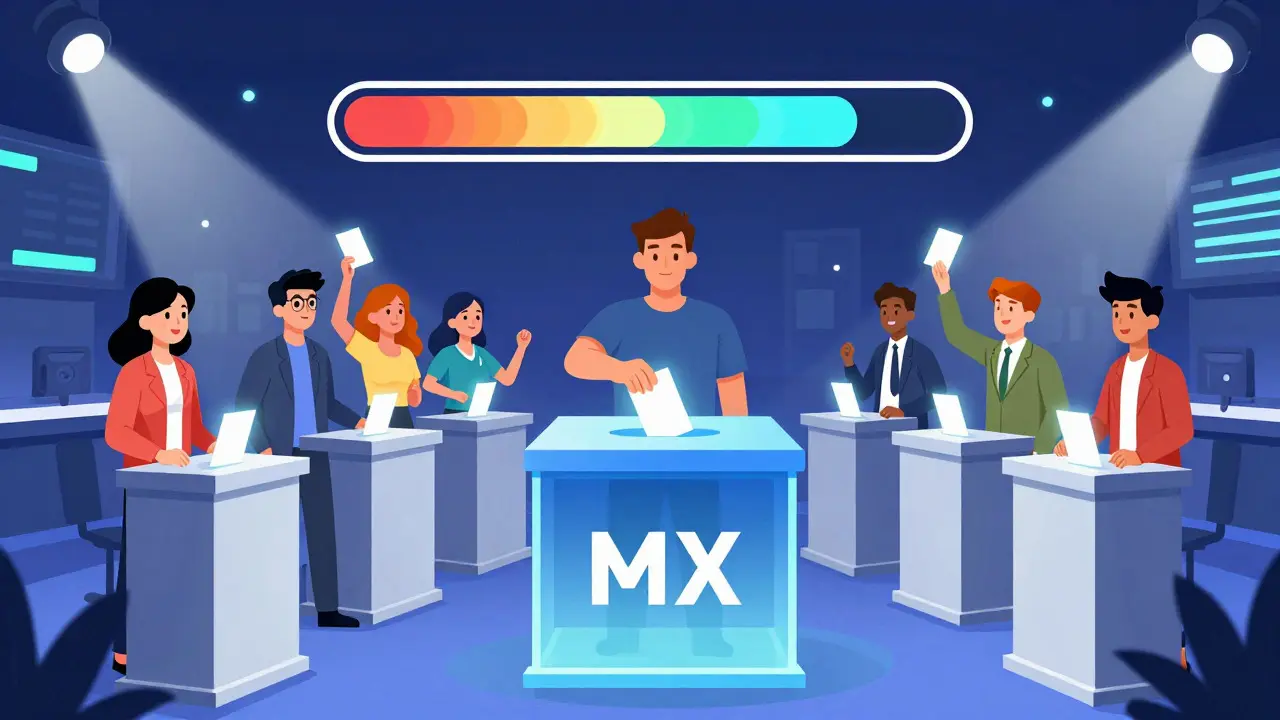
The most significant opportunity for earning ZAM tokens right now is through the MEXC Kickstarter initiative. This isn't a "sign up and wait" scenario; it requires active participation from the MEXC exchange community.
| Feature | Details |
|---|---|
| Total Reward Pool | 160,000 ZAM Tokens |
| Reference Price | $0.23 per ZAM |
| Total Theoretical Value | $36,800 |
| Voting Mechanism | MX Tokens |
| Max Vote Weight | 500,000 MX Tokens |
Here is how the process works. MEXC users can vote for projects using their native MX tokens. In this case, votes cast for Zamio contribute to its success in the Kickstarter program. The reward pool of 160,000 ZAM tokens is distributed to participants based on their engagement and voting weight. The reference price of $0.23 gives us a baseline for value, suggesting the entire pool is worth approximately $36,800 at launch.
However, there is a catch. The voting power is capped at 500,000 MX tokens. This prevents "whales"-users with massive amounts of capital-from dominating the entire reward distribution alone. It levels the playing field slightly, ensuring that mid-tier holders still have a chance to earn a meaningful share of the ZAM tokens. If you hold MX tokens, this is essentially free money if you vote strategically, but you need to be aware of the competition. Since the distribution is proportional to votes, more voters mean a smaller slice of the pie for each individual participant.
CoinMarketCap NFT Drop: Exclusive Access
While the MEXC campaign focuses on fungible tokens, Zamio is also running a parallel campaign on CoinMarketCap. This one is different because it distributes Non-Fungible Tokens (NFTs) rather than ZAM coins directly.
The details are precise: there are exactly 88 NFTs available for 88 winners. This creates a strict one-to-one distribution model. Each winner receives one unique digital asset. Why 88? In many Asian markets, particularly Chinese culture, the number 88 is considered extremely lucky. This suggests Zamio is strategically targeting regions where crypto adoption is high and cultural numerology influences financial decisions.
Participation in the CoinMarketCap drop likely involves completing specific tasks or meeting certain criteria on the platform, such as following the project, joining social channels, or holding specific assets. Unlike the MEXC vote which is continuous until the campaign ends, this is a fixed-supply drop. Once those 88 NFTs are claimed, they are gone. These NFTs may unlock special privileges within the Zamio ecosystem, such as early access to new features or higher yields in the expert-managed portfolios.
Is the $0.23 Reference Price Realistic?
You will see the figure $0.23 mentioned frequently in relation to the ZAM token. It is crucial to understand that this is a reference price, not a guaranteed market price. In the volatile world of cryptocurrency, especially during airdrop distributions, initial trading prices often fluctuate wildly.
When 160,000 tokens hit the market simultaneously, sell pressure can drive the price down below the reference value. Conversely, if the Zamio ecosystem delivers on its promise of integrating traditional equity into DeFi, demand could push the price significantly higher. Historical data from 2025 shows that projects with clear utility and strong partnerships tend to maintain better floor prices than speculative tokens. Zamio’s focus on practical tools like phone-number-based transfers and stablecoin integration puts it in the stronger category.

Strategic Considerations for Participants
Should you participate? Here is a breakdown of the pros and cons based on current market conditions.
The Pros:
- Low Barrier to Entry: If you already hold MX tokens or use CoinMarketCap, the cost to participate is minimal.
- Utility-Backed: ZAM is not a dead token; it has governance rights and access to DeFi products.
- Legitimacy: Partnerships with established platforms like MEXC and CoinMarketCap reduce the risk of scams compared to standalone Telegram group drops.
The Cons:
- Dilution: With thousands of voters on MEXC, your individual share of the 160,000 ZAM pool may be small unless you have significant MX holdings.
- Tax Implications: In many jurisdictions, receiving airdropped tokens is considered taxable income at the fair market value at the time of receipt. Keep records.
- Market Volatility: The value of your ZAM tokens could drop immediately after you claim them if large holders sell.
How to Maximize Your Chances
If you decide to jump in, here is how to do it smartly. First, ensure your MEXC account is fully verified and funded with MX tokens. Check the exact start and end dates of the Kickstarter campaign, as missing the window means missing out entirely. Second, engage with the CoinMarketCap listing. Follow the project, join the Discord, and complete any listed tasks. These actions often boost visibility and may qualify you for future retroactive drops.
Finally, keep an eye on the broader Zamio roadmap. Their goal of transferring global equity to DeFi is ambitious. If they succeed in partnering with traditional financial institutions to tokenize real-world assets, the ZAM token could see substantial appreciation. The airdrop is just the entry ticket; the long-term value comes from the ecosystem's growth.
How do I claim my ZAM tokens from the MEXC airdrop?
You typically claim tokens through the MEXC Kickstarter dashboard. After the voting period ends, eligible participants receive their ZAM tokens directly into their MEXC spot accounts. No additional transaction fees are usually required for the claim itself, but standard withdrawal fees apply if you move them off-exchange.
Is the Zamio airdrop free?
The MEXC Kickstarter allows you to vote using MX tokens, which you must already own. There is no direct cash payment to enter, but holding MX tokens represents an opportunity cost. The CoinMarketCap NFT drop may require completing tasks, which is free but time-consuming. Always verify official sources to avoid phishing sites asking for payments.
What is the difference between ZAM, AEDZ, and USDZ?
ZAM is the volatile governance token used for voting and ecosystem access. AEDZ is a stablecoin pegged to the UAE Dirham, and USDZ is pegged to the US Dollar. Stablecoins provide price stability for transactions, while ZAM offers potential appreciation.
Are there tax implications for receiving Zamio airdrops?
In many countries, including the US and parts of Europe, airdropped tokens are taxed as ordinary income at their fair market value on the day you receive them. When you later sell or trade them, capital gains tax applies. Consult a local tax professional for advice specific to your jurisdiction.
Why is the number 88 significant for the CoinMarketCap drop?
The number 88 is considered highly auspicious in Chinese culture, symbolizing prosperity and good luck. By limiting the NFT drop to 88 units, Zamio likely aims to attract attention and participation from Asian crypto markets where this cultural significance drives engagement.
This looks incredibly promising for retail investors who have been burned by vague promises in the past! The structured approach with MEXC and CoinMarketCap adds a layer of legitimacy that is often missing in these spaces. I am particularly interested in how the stablecoins AEDZ and USDZ will integrate with the governance token ZAM. It seems like a thoughtful ecosystem design rather than just a speculative pump. Keep us updated on your progress!
hmm interesting.. i always thought airdrops were just scams lol :/ but the 88 nft thing is cute? maybe they are targeting my cousins in shanghai or something xD
the metaphysical alignment of the number eighty-eight suggests a cosmic resonance with prosperity, yet one must question if the material value of these tokens can truly capture the essence of decentralized finance or if it is merely a digital mirage reflecting our collective greed and desire for easy wealth in an increasingly fragmented economic landscape where trust is a commodity scarcer than gold itself.
Hey everyone! 👋 Just wanted to say that the partnership with MEXC is huge. 🚀 I’ve been holding MX for a while so this feels like a nice bonus. The reference price of $0.23 is solid if it holds. Let’s go team Zamio! 💪🔥
Indeed; the mechanics appear sound! One must consider the tax implications carefully, as noted in the guide. Furthermore, the cap on voting power at 500,000 MX tokens is a brilliant move to prevent whale dominance. It fosters a more democratic distribution model. Bravo! Well done to the team for such transparency.
morality in crypto is a joke but at least this one has rules. most projects are just ponzi schemes dressed up in blockchain jargon. this one seems to have actual utility though which is rare. do not get greedy people.
the paradigm shift here is subtle but profound. we are moving from speculative assets to utility-driven governance tokens backed by real-world asset tokenization potential. the tri-token system creates a closed loop of value exchange that mitigates volatility risks typically associated with pure governance tokens. fascinating architecture.
don't be fooled by the surface level metrics. the centralized control behind MEXC and the likely insider trading advantages mean the average user gets scraps. the 'reference price' is a psychological anchor designed to inflate perceived value before the inevitable dump. wake up sheeple.
boring. another airdrop. whatever.
look i dont know much about this but it seems like work for little reward. why bother when you can just buy the dip later? typical hype cycle stuff. save your energy.
I have been following this space for years and it is refreshing to see a project that actually explains its tokenomics clearly without hiding behind whitepaper gibberish. The fact that they are using established platforms like CoinMarketCap for the NFT drop gives me confidence that this isn't going to rug pull overnight. I am curious to see how the community reacts once the voting starts and whether the dilution concerns mentioned in the post become a reality or if the engagement levels remain high enough to make the rewards worthwhile for smaller holders.
everyone is sleeping on the tax angle. sure it sounds free now but wait until april comes around and the irs wants their cut. also 88 nfts is too few. it's artificial scarcity. don't believe the hype machine.
Oh, darling, you simply must understand the sheer elegance of this cultural numerology play! Eighty-eight is not just a number; it is a vibration of abundance that resonates with the subconscious desires of the Asian markets. To ignore this would be intellectually bankrupt. I shall certainly cast my vote, for I alone see the deeper meaning hidden within the code. 😌✨
Hey there! :) Great breakdown. If you are new to this, make sure you verify your account early. It saves headaches later. The MEXC kickstarter is straightforward if you already hold MX. Good luck to everyone participating! (Y)
LISTEN UP!!! This is a golden opportunity!! Don't let the haters tell you otherwise!! Get your MX tokens ready and VOTE!! The community is strong and we will crush it!! Who is with me?! LET'S GOOOO!!! 🔥🔥🔥
They are tracking your votes! 🕵️♂️ The data from MEXC goes straight to the SEC and then to your local government. They want to know exactly what you own. Be careful out there. The matrix is watching. 👁️📉
Your emotional attachment to this 'fairness' narrative is quaint. The structural inequities inherent in any platform-mediated distribution ensure that those with capital retain advantage. You are participating in a simulation of democracy while the architects profit. Pathetic.
yo check the dates man! miss the window and you got nothing. also dont forget to join the discord for the cmc tasks. its legit chill vibes if you do it right. no stress just follow the steps. good luck fam!
The tokenomics are suboptimal; however, the strategic alliance with MEXC provides necessary liquidity depth. Volatility will persist. Manage risk accordingly. Do not overexpose your portfolio to a single airdrop event. Diversify.
It is fascinating to observe how traditional financial concepts are being reimagined through the lens of decentralization. The idea of transferring global equity into DeFi is not just a technical challenge but a philosophical one. What does it mean to own a piece of the world's economy in a trustless environment? This project attempts to answer that, albeit imperfectly.
I think this is a great step forward for inclusivity in finance. The cultural nod with the 88 NFTs shows they are thinking globally. I'm optimistic about the future of ZAM if they keep delivering on utility. Let's support each other in this journey! 🌍💸
pretty wild how they pegged stablecoins to both dirham and dollar. usually you only see usd. makes me wonder if they are focusing heavily on the gulf region markets. could be a smart niche play or just confusing branding. time will tell.
the boundary between user and investor is dissolving here. we are all participants in this grand experiment of value extraction. the jargon of 'governance' masks the reality of speculation. yet one cannot deny the allure of free tokens. perhaps we are all just chasing the ghost of financial freedom in a digital void.