THORChain (BEP20) Review 2025: Decentralized Cross‑Chain Exchange Verdict
A 2025 THORChain (BEP20) review covering tech, trading experience, security, RUNE tokenomics, competition, pros & cons, and FAQs for crypto users.

When working with cross-chain swap, the method that lets a token on one blockchain be exchanged for its counterpart on another without exiting the crypto environment. Also known as inter‑blockchain swap, it sits at the heart of modern DeFi. A Decentralized Exchange, a peer‑to‑peer platform where trades happen directly on‑chain often provides the user‑friendly interface for the swap. Underneath, a Liquidity Bridge, a set of contracts that lock assets on the source chain and mint wrapped versions on the destination chain makes the movement possible. All of this runs on smart contracts, self‑executing code that enforces the trade rules without a central party. Together they enable cross-chain swap functionality that is atomic, trust‑minimized, and fast enough for everyday traders.
In practice, a cross-chain swap encompasses token interoperability: the ability of different blockchain ecosystems to understand and value each other's assets. It requires liquidity bridges to maintain a one‑to‑one peg while safeguarding against double‑spending. A reputable Decentralized Exchange influences the swap experience by offering competitive fees and deep liquidity pools, which in turn affect swap speed and security. Key attributes include atomic execution (so either both sides of the trade happen or none), transparent fee structures, and built‑in safeguards like time‑locks and proof‑of‑reserve checks. When these pieces click, users can move from Ethereum to Binance Smart Chain, from Solana to Avalanche, or from any supported network with just a few clicks, opening up arbitrage, yield‑farming, and gaming opportunities that were previously siloed.
The articles below cover the whole ecosystem that makes cross-chain swaps possible. Dive into airdrop guides for projects like SoccerHub (SCH) and SpaceY 2025 (SPAY), which often launch on multiple chains and rely on bridges to reach users. Read in‑depth reviews of DEX platforms such as RAI Finance, SyncSwap v2, and SushiSwap (Gnosis) that highlight their cross‑chain capabilities, fee models, and security features. We also explore broader topics like DeFi vs. traditional finance, token KYC on blockchain, and the regulatory landscape affecting cross‑chain activity in regions like Russia and Iran. Whether you’re a beginner curious about how a token can jump from one chain to another, or an experienced trader looking for the latest bridge vulnerabilities, the collection gives you practical insights, safety tips, and market trends to stay ahead in the fast‑moving world of cross-chain swaps.
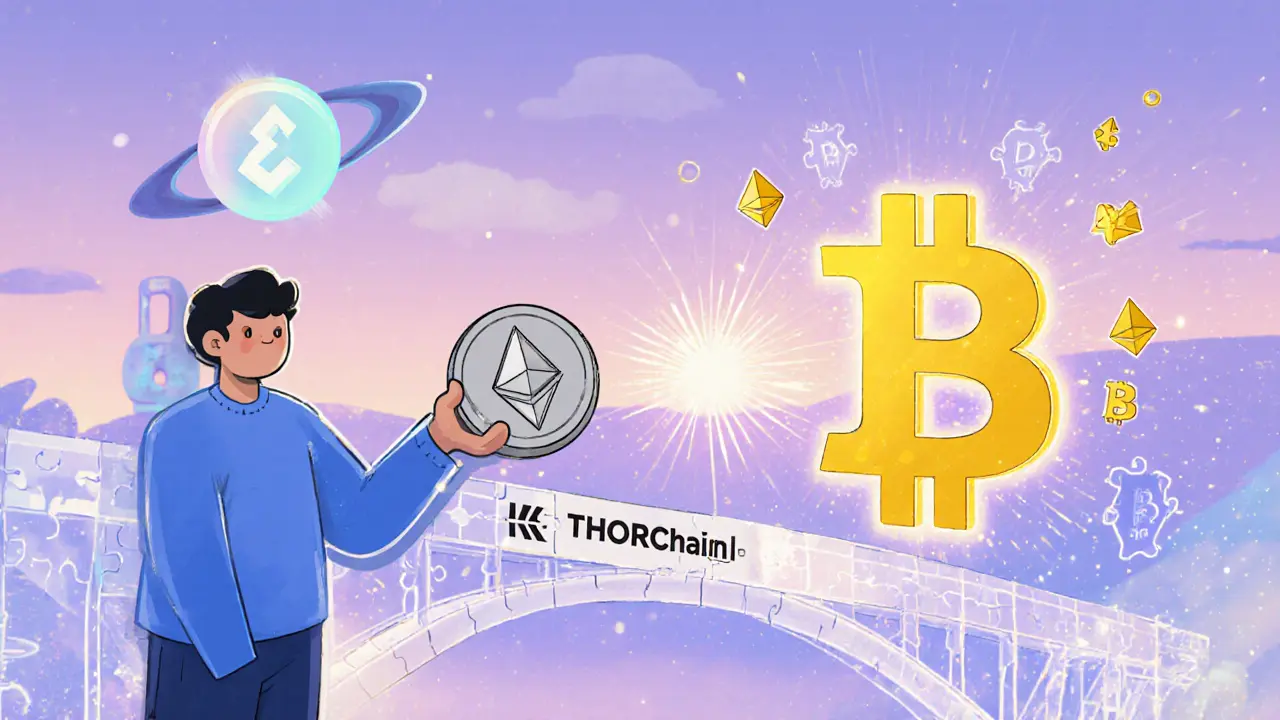
A 2025 THORChain (BEP20) review covering tech, trading experience, security, RUNE tokenomics, competition, pros & cons, and FAQs for crypto users.