Best Countries for Crypto Trading in 2025: Tax, Regulation & Residency Guide
Discover the best countries for crypto trading in 2025. Compare tax rates, regulatory clarity, and residency options in UAE, Switzerland, Singapore, and Portugal.

When navigating FinTech, the fusion of finance and technology that reshapes how money moves, is stored, and regulated. Also known as financial technology, it bridges digital innovation with banking, investing, and payments, you quickly see three core forces at play: decentralized finance, secure identity verification, and next‑gen service platforms. FinTech isn’t just a buzzword; it’s a network of tools that enable faster, cheaper, and more transparent financial services.
DeFi, a subset of FinTech that moves lending, trading and yield generation onto public blockchains demonstrates how smart contracts replace traditional intermediaries. This shift forces banks to rethink risk models while giving users direct control over assets. Meanwhile, Distributed Ledger Technology, the broader family of immutable databases that includes public blockchains, private ledgers, and consortium networks powers the reliability behind every token swap, cross‑border payment, and regulatory report. On the compliance side, KYC, the process of verifying a user’s identity to meet anti‑money‑laundering rules is being rebuilt on blockchain for speed and data ownership, cutting onboarding from days to minutes. Finally, BaaS, Banking as a Service platforms that expose core banking APIs to fintech startups let new players launch cards, accounts, and credit products without building a full‑scale bank infrastructure.
These pillars intersect constantly: DeFi protocols rely on DLT for trust, DLT requires robust KYC to stay compliant, and BaaS uses both to embed traditional banking functions into novel apps. The result is a vibrant ecosystem where regulators, developers, and consumers all influence each other.
Below you’ll find deep dives that unpack each of these themes—real‑world use cases, risk considerations, and step‑by‑step guides. Whether you’re a developer looking for the right DLT, a compliance officer exploring blockchain KYC, or an entrepreneur evaluating BaaS partners, the articles ahead give you the context you need to make informed decisions.

Discover the best countries for crypto trading in 2025. Compare tax rates, regulatory clarity, and residency options in UAE, Switzerland, Singapore, and Portugal.

Learn how crypto-backed stablecoins like DAI maintain value using overcollateralization and smart contracts, offering a decentralized alternative to fiat-backed options.

Explore how blockchain technology is reshaping digital transactions in 2026. From Layer 2 scaling to stablecoin adoption, discover why businesses are switching from traditional banking rails.

Understand how Mexico taxes cryptocurrency income and capital gains. Learn about the 30% corporate rate, progressive individual rates, the $90k MXN exemption, and compliance rules under the Fintech Law.

Discover how blockchain enables direct electricity sales between neighbors. Learn about P2P energy trading benefits, tech requirements, and real-world success stories.

Discover how blockchain technology slashes insurance claims processing time from weeks to minutes. Learn about smart contracts, fraud reduction, and the future of automated payouts.

Discover the best methods to accept stablecoin payments on your website in 2026. Compare custodial vs. non-custodial gateways, analyze fees, and learn how to integrate USDC and USDT securely.

Explore how blockchain insurance platforms use smart contracts to automate claims, reduce fraud, and cut costs. We compare top players like Nexus Mutual and explain who should switch today.

Explore how institutional crypto investment is evolving in 2026. From Bitcoin ETFs to tokenization, discover why big money is entering digital assets and what it means for your portfolio.

A deep dive into Japan's strict crypto licensing framework, covering the shift to FIEA, FSA requirements, JVCEA self-regulation, and the 95% cold storage rule.

Explore why the UAE is the top global crypto hub. Learn about VARA licensing, the CARF tax framework, and the rules for digital assets in 2026.
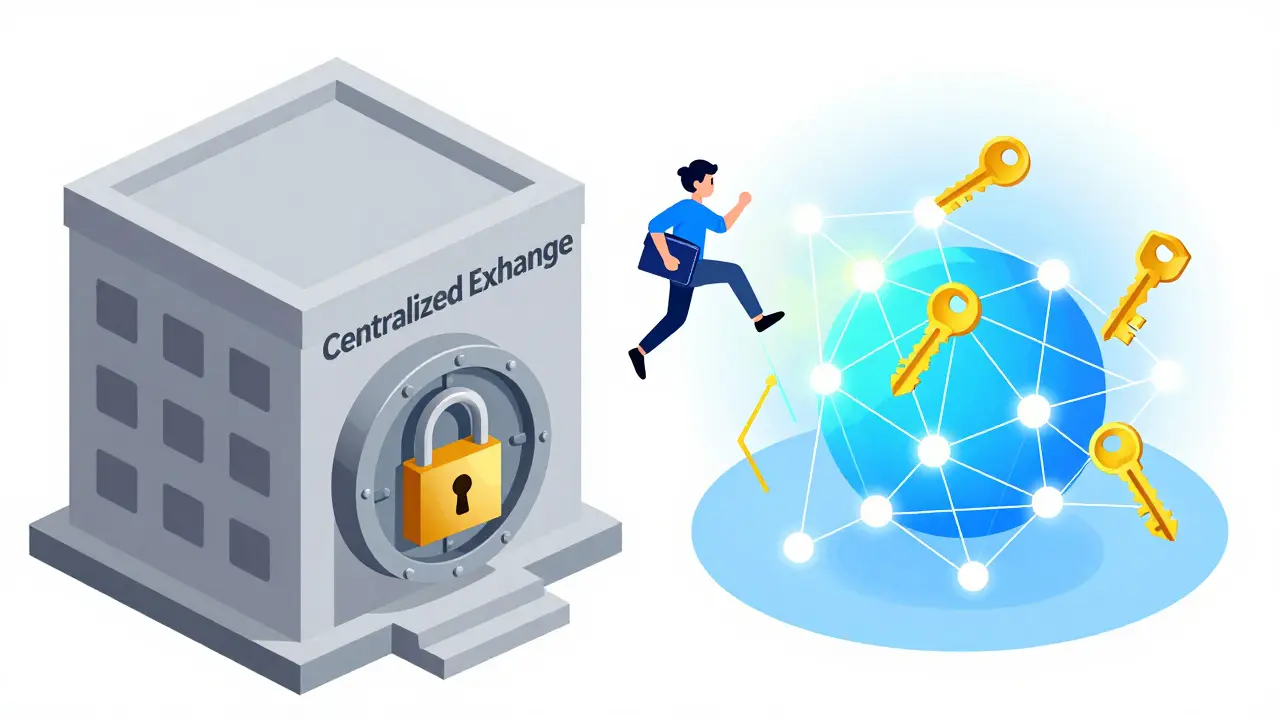
Explore the best DEX options for Iranian citizens to bypass centralized freezes and sanctions. Learn about the shift to Polygon and DAI for secure crypto trading.