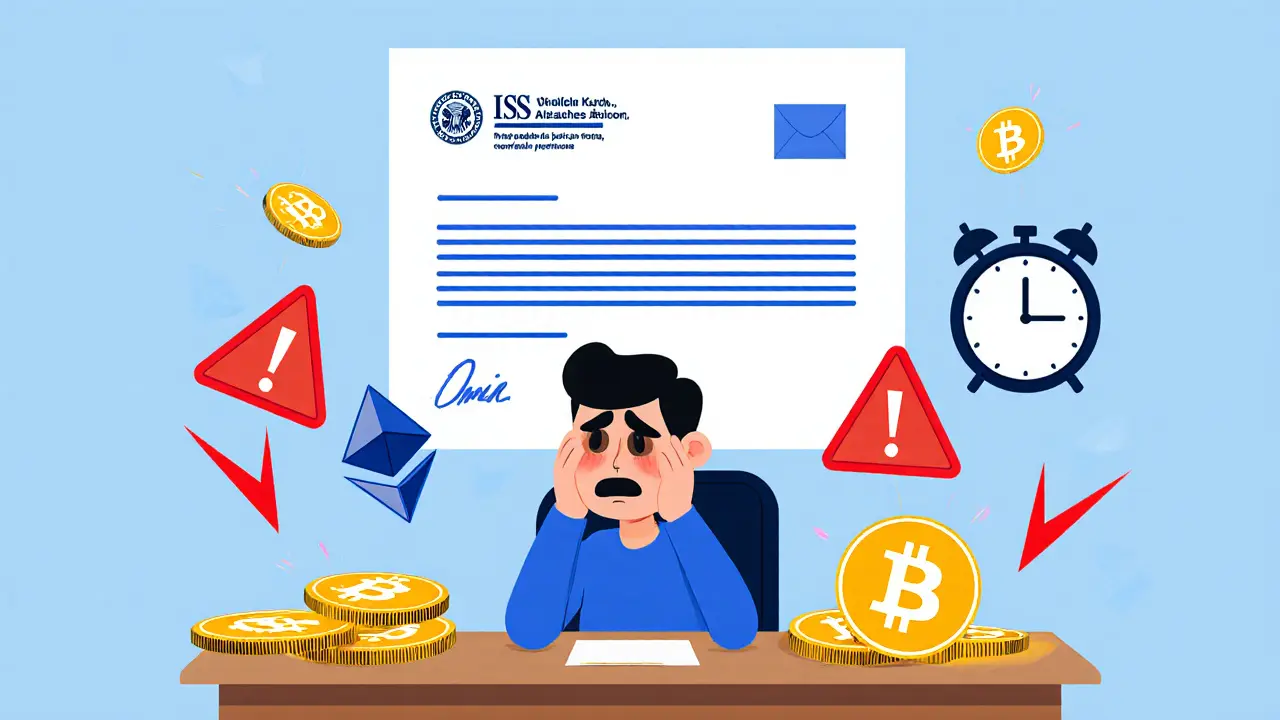
Crypto Fines: What You Need to Know About Crypto Penalties and Regulations
When you trade or hold cryptocurrency, you’re not just dealing with price charts—you’re dealing with crypto fines, penalties imposed by governments for failing to report, register, or comply with digital asset rules. Also known as crypto penalties, these aren’t warnings—they’re legal consequences that can include fines, asset seizures, or even criminal charges. The U.S., Bolivia, Jordan, and the UAE all handle crypto differently, but one thing’s clear: ignoring reporting rules doesn’t make the problem disappear.
Crypto regulations, the legal frameworks governments use to control how digital assets are traded, taxed, and reported are tightening fast. In the U.S., FATCA and FBAR rules force citizens to declare foreign crypto holdings, and missing the deadline can mean a $10,000 fine per year. In Bolivia, trading crypto outside authorized banks now carries legal risks, while in the UAE, being removed from the FATF grey list meant stricter licensing—not less oversight. Even if you think you’re just holding Bitcoin in a wallet, if you’re a U.S. citizen, you’re still under the IRS radar.
Crypto compliance, the act of following tax, reporting, and licensing rules for digital assets isn’t optional. Exchanges like CoinCorner and Uniswap v2 on Base are legal because they follow local rules. But platforms like GSAE, CherrySwap, and DIFX? They vanish because they ignore them. And if you’re using a shady exchange or a dead token like Isabelle (BELLE) or Airbloc (ABL), you’re not just risking your money—you’re risking your legal standing. The IRS doesn’t care if the coin is "memecoins" or "decentralized." If it has value, it’s reportable.
Some people think crypto fines only hit big traders. That’s wrong. They hit anyone who doesn’t file Form 8938, ignores FBAR thresholds, or uses an unregulated platform. Even if your crypto is worth $5,000 and you bought it on a small exchange, you still owe the IRS a report. And if you’re in a country like Bolivia or Jordan, where the central bank now controls everything, you could lose access to your own funds if you don’t follow the new licensing rules.
What you’ll find below isn’t a list of scary headlines. It’s a real-world map of where crypto fines come from, who’s being targeted, and how to avoid them. From the $0 trading volume ghost tokens that get flagged as scams to the exchanges that got shut down for lacking audits, every post here shows how compliance isn’t boring—it’s survival.
Crypto tax evasion can land you in jail for up to five years and cost you $250,000 in fines. The IRS now tracks every transaction with new 2025 reporting rules. Here’s what you need to know to avoid criminal penalties.