DAO Governance: How Decentralized Communities Make Decisions
When you hear DAO governance, a system where token holders vote on decisions for a blockchain project without a CEO or board. Also known as decentralized autonomous organization governance, it’s how groups like Uniswap, MakerDAO, and Compound actually run themselves — no middlemen, no corporate offices, just code and votes. This isn’t theory. It’s live. People with $50 worth of tokens can propose changes, and thousands vote yes or no. But not all DAOs work the same. Some let anyone join. Others lock voting power to big holders. Some use quadratic voting to stop whales from dominating. And many? They collapse because no one shows up to vote.
DAO governance relies on three things: token-based voting, a system where your voting power matches how many tokens you hold, proposal mechanisms, how members submit and debate changes, and on-chain execution, the smart contracts that automatically carry out approved decisions. If any piece breaks — say, low turnout, bad proposals, or a hack — the whole thing stalls. Look at the failed DAOs. Most didn’t die from code flaws. They died because no one cared enough to vote. A DAO with 50 active voters isn’t decentralized. It’s just a small club with a fancy name.
Real DAOs need participation, not just tokens. Some projects pay voters in rewards. Others tie voting to staking or long-term holding. But the best ones? They make voting simple. Clear proposals. Short debates. Fast results. And they don’t hide behind complex jargon. If you’ve ever wondered why your favorite DeFi protocol changed its fees, added a new feature, or killed a token — that’s DAO governance in action. The posts below show you exactly how it plays out: from successful votes that saved projects, to ghost DAOs where no one shows up, to scams pretending to be community-run. You’ll see what works, what doesn’t, and why some tokens mean nothing if no one’s watching the vote.
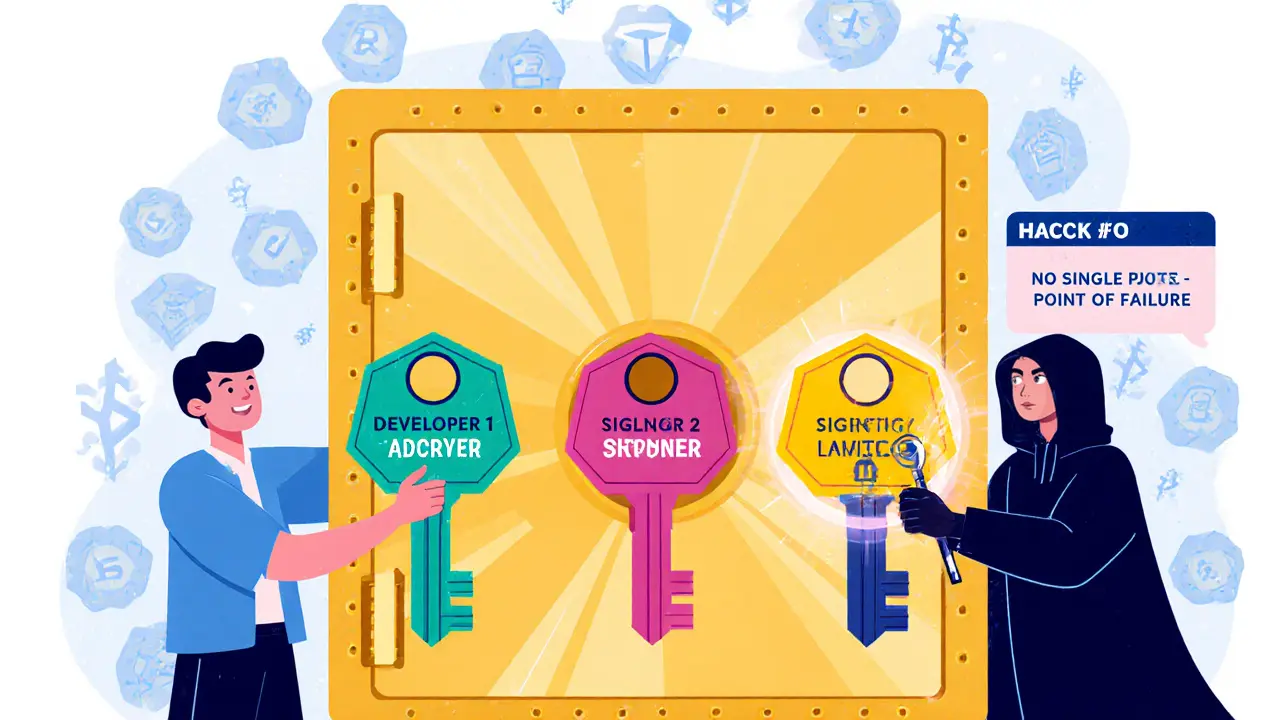
MultiSig wallets protect DAO treasuries by requiring multiple approvals for transactions, preventing hacks, reducing single points of failure, and meeting regulatory standards. Gnosis Safe leads adoption with 68% market share.