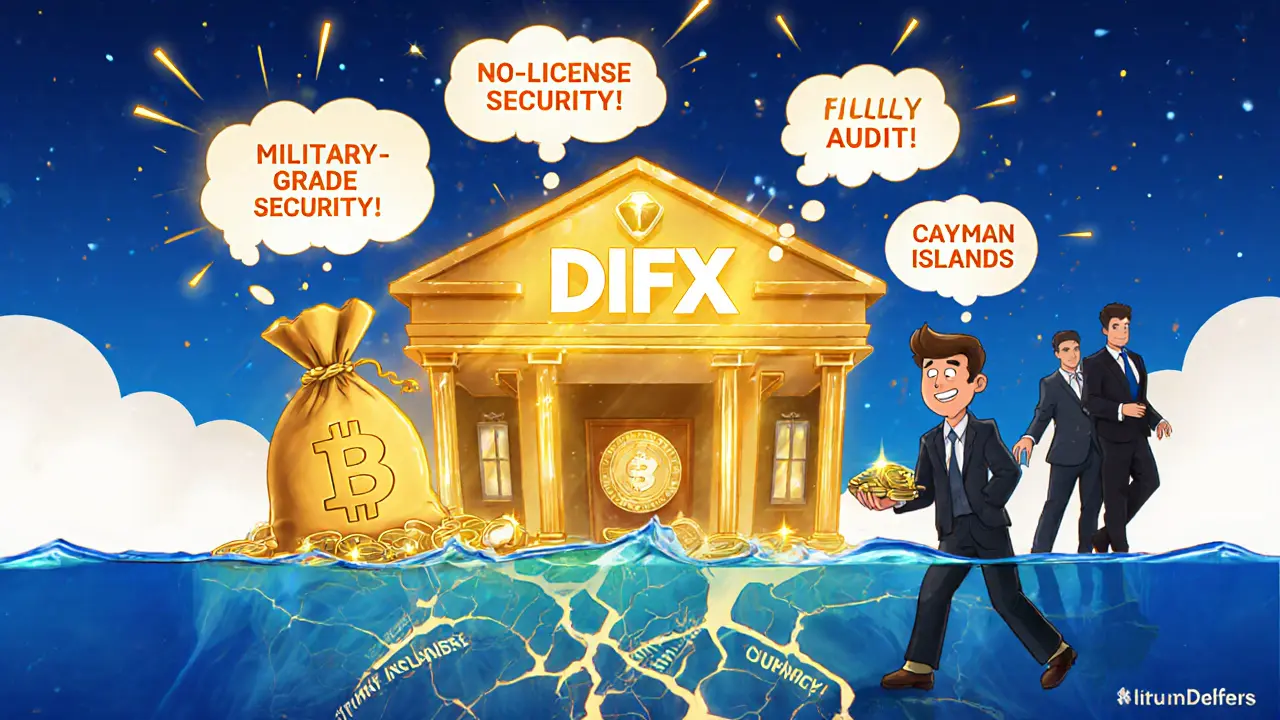
DIFX Security: What It Is, Why It Matters, and What to Watch For
When you hear DIFX security, a term often tied to the safety protocols of decentralized finance platforms. It's not about fancy logos or audit certificates—it's about whether your money can actually be stolen, frozen, or lost because of poor design. Most crypto users think security means "no hacks," but that’s just the start. Real DIFX security means your funds aren’t tied to a single point of failure, your private keys stay yours, and the platform doesn’t rely on opaque smart contracts with hidden backdoors.
Think about crypto exchange security, the layer that protects users when trading or holding tokens on platforms like COREDAX or Bitbaby. If an exchange doesn’t use multi-sig wallets, doesn’t publish regular proof-of-reserves, or hides its team behind anonymous GitHub accounts, it’s not secure—it’s a gamble. And DeFi security, the system of checks that keeps smart contracts from being drained by exploits, is even trickier. A token might have a clean audit from CertiK, but if the owner can pause withdrawals or mint new tokens at will, that audit is just paper. We’ve seen it over and over: tokens like BELLE, ABL, and BOW all had clean audits but zero real users. That’s not security—that’s theater.
Then there’s token security, how a token’s code prevents rug pulls, minting abuse, or owner manipulation. If a token’s contract allows the team to freeze wallets or change supply at any time, you’re not holding an asset—you’re holding a promise that can vanish with a click. Look at SCIX or PAXW: both had airdrops that turned into scams because the token’s control was centralized. Real token security means no owner keys, no mint functions, and no pause buttons. And exchange risks, the hidden dangers of using platforms without clear licensing or transparent operations, are everywhere. Platforms that don’t list their legal entity, avoid KYC, or disappear after a marketing push? They’re not exchanges—they’re temporary cash traps.
You won’t find DIFX security in ads or Twitter threads. You’ll find it in the code, in the ownership structure, in the history of who’s behind the project. The posts below show you exactly what to look for—whether it’s a token with zero volume, an exchange with no regulatory footprint, or an airdrop that asks for your seed phrase. This isn’t about fear. It’s about knowing what real safety looks like before you put your money in.
DIFX crypto exchange claims low fees and full insurance, but lacks regulation, audits, and transparency. Independent analysts warn it's not safe. Here's why you should avoid it in 2025.