Gnosis Safe: What It Is and Why It Matters for Crypto Security
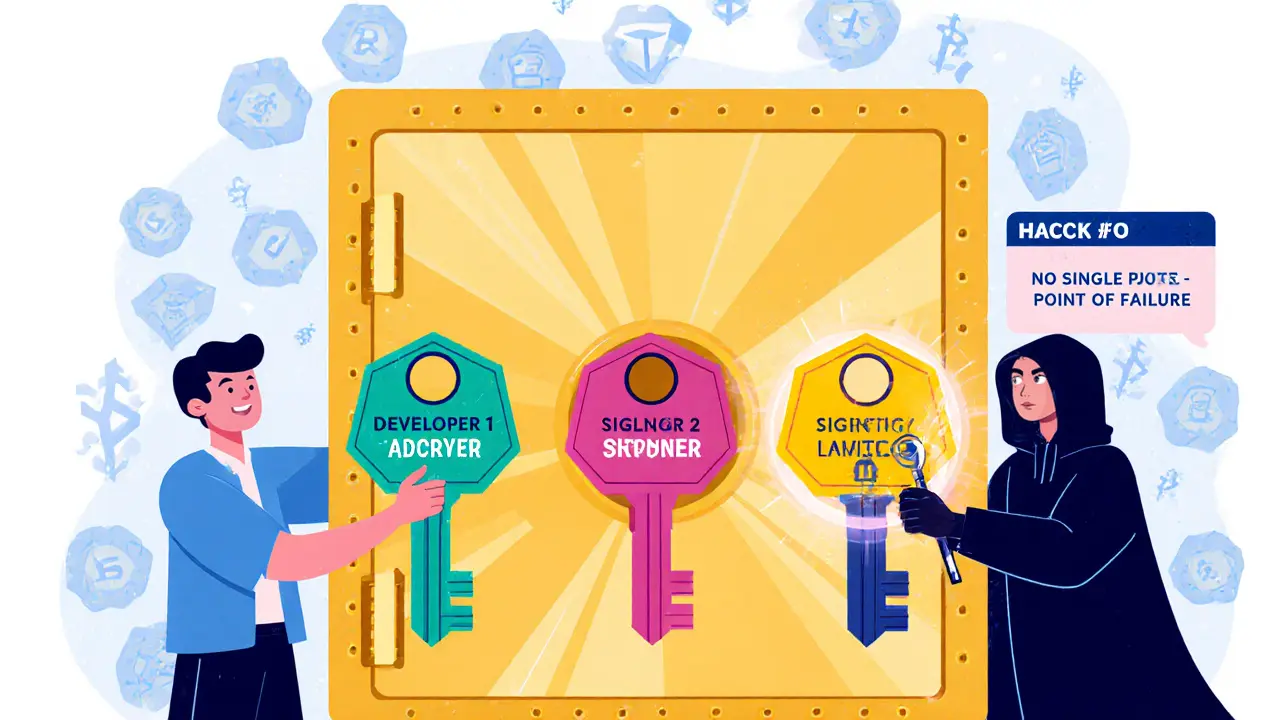
When you hold crypto, you’re not just storing value—you’re holding control. That’s where Gnosis Safe, a secure, open-source multisignature wallet designed for individuals and organizations to manage crypto assets with shared control. Also known as Safe (formerly Gnosis Safe), it lets you require multiple keys to approve transactions, so one hacked device or phishing scam won’t drain your funds. Unlike regular wallets where a single private key controls everything, Gnosis Safe splits control across multiple people or devices. Think of it like a bank vault that needs two people to open it—not one. That’s why teams at Uniswap, Aave, and Compound use it. And if you’re holding more than a few hundred dollars in crypto, you should too.
It’s not just about having multiple signatures. Gnosis Safe works on Ethereum, Polygon, Arbitrum, and other chains, so you can secure tokens, NFTs, and even governance votes. It connects to MetaMask, WalletConnect, and hardware wallets like Ledger. You can set up rules: maybe you need 3 out of 5 signatures, or 2 out of 3 with a 24-hour delay for large withdrawals. That’s not just security—it’s peace of mind. And because it’s open-source, anyone can audit the code. No black boxes. No hidden backdoors. This is why it’s the standard for DeFi teams and serious holders.
But it’s not magic. If you set up a 1-of-1 wallet by accident, you’re back to square one. If you lose all your keys, your funds are gone forever. That’s why many of the posts below show how people mess up Gnosis Safe setups—like forgetting to add a backup signer, using weak passwords for their devices, or trusting a fake support site. The tool is solid. The human part? That’s where things go wrong. You’ll find real cases here: how a team lost $2M because they didn’t verify a transaction on the right network, how a solo investor recovered funds after a key was stolen, and why even big projects still get hacked despite using Gnosis Safe.
What you’ll see in the posts below aren’t just random stories. They’re lessons from the front lines of crypto security. You’ll read about exchanges that claim to be safe but skip multisig entirely. You’ll see how fake airdrops trick users into approving malicious contracts on their Safe wallets. You’ll learn how vesting schedules and governance votes are locked in using Gnosis Safe—and how easily they can be compromised if not configured right. This isn’t theory. It’s what’s happening right now, to real people.
MultiSig wallets protect DAO treasuries by requiring multiple approvals for transactions, preventing hacks, reducing single points of failure, and meeting regulatory standards. Gnosis Safe leads adoption with 68% market share.