KTN Token: What It Is, Why It’s Missing, and What to Watch For
When you hear about KTN token, a cryptocurrency that briefly appeared on some decentralized exchanges before vanishing without a trace. Also known as KTN crypto, it’s one of hundreds of tokens that pop up with hype, then disappear—leaving behind empty wallets and confused investors. There’s no official website, no whitepaper, no team behind it, and no exchange listing that still supports trading. If you see someone promoting KTN as a new investment or airdrop, they’re either misinformed or trying to trick you.
What makes KTN dangerous isn’t just that it’s dead—it’s that scammers reuse names like this to lure people into fake claim sites. You’ll find pages asking you to connect your wallet, pay gas fees to "unlock" KTN tokens, or join Telegram groups for "exclusive access." None of it’s real. These sites steal crypto through fake approvals or drain wallets with hidden transactions. The same pattern shows up in posts about DogeMoon (DGMOON), a token with zero liquidity and a known scam operation, or FOC from TheForce.Trade, a project that vanished after fake airdrop rumors spread. KTN fits right in. It’s not a coin—it’s a ghost.
Even if KTN had a real origin, its market data tells the full story: no trading volume, no holders, no price charts on CoinGecko or CoinMarketCap. Real tokens, even small ones, have at least some activity. KTN doesn’t. It’s not a hidden gem—it’s a dead end. And if you’re looking for airdrops or low-cap gems, you’ll find plenty of real opportunities in the posts below. But you won’t find one called KTN that’s worth your time. What you will find are clear breakdowns of real tokens, confirmed scams, and how to spot the next KTN before you lose money.
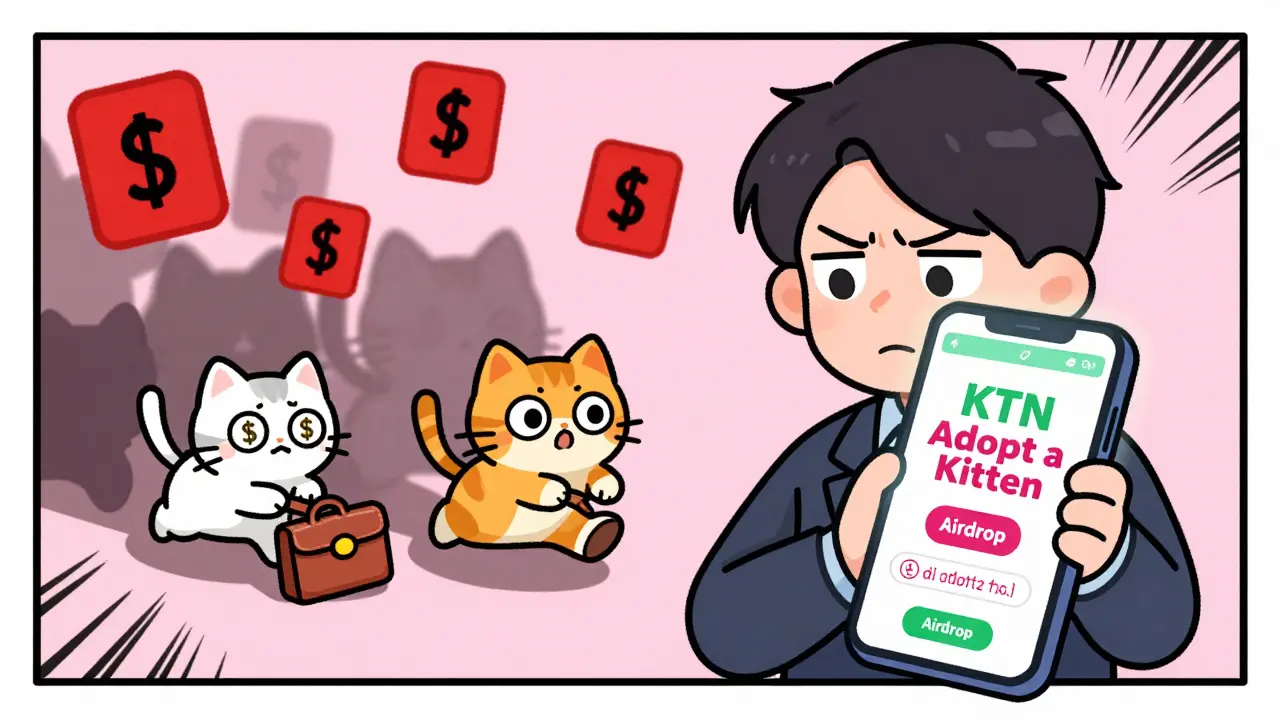
The KTN Adopt a Kitten airdrop has no official details, a broken smart contract, and multiple user warnings. Avoid this token - it's likely a scam. Stick to verified crypto airdrops with transparent teams and audited contracts.