MultiSig DAO: How Multi-Signature Governance Shapes Decentralized Organizations
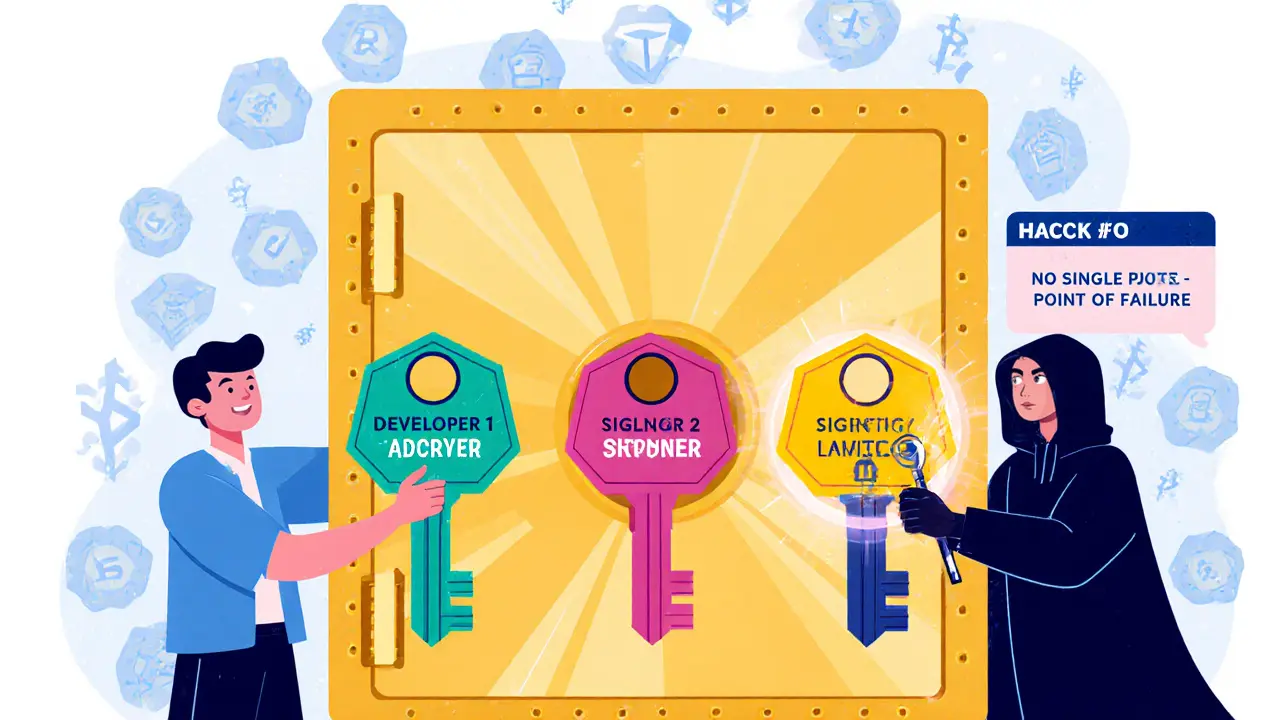
When you hear MultiSig DAO, a decentralized autonomous organization that requires multiple signatures to approve actions. Also known as multi-signature governed DAO, it’s not just a smart contract—it’s a digital partnership where no single person holds full control. This isn’t theory. It’s how real crypto projects avoid theft, prevent rogue admins, and keep decision-making fair. Think of it like a bank vault that needs three keys to open—except all three keys are held by different people in different countries, and no one can move money without the others agreeing.
Behind every multi-signature wallet, a cryptographic system requiring multiple private keys to authorize transactions is a simple idea: trust no one, verify everything. That’s why top DAOs like decentralized autonomous organization, an organization run by rules encoded in smart contracts, without central leadership use 3-of-5 or 5-of-7 signing setups. If one member gets hacked, loses their key, or turns shady, the DAO doesn’t collapse. It keeps going. This setup directly fights the kind of exploits we’ve seen in lending protocols and exchange hacks—where one compromised key meant millions vanished overnight.
MultiSig DAOs don’t just protect funds—they change how communities make decisions. Voting isn’t just a click. It’s a deliberate, verifiable act that requires alignment. That’s why projects with strong governance, like those tied to real-world regulation or institutional adoption, lean hard on MultiSig DAO structures. They’re not flashy. They don’t promise 1000x returns. But they’re the reason some crypto projects survive when others crash. You’ll find them in the background of every serious DeFi protocol, every token with real utility, and every team that wants to last beyond the next bull run.
What you’ll find in this collection aren’t hype posts or vague guides. These are deep dives into how MultiSig DAOs actually work—when they fail, when they shine, and how they connect to real crypto risks like smart contract vulnerabilities, exchange scams, and failed airdrops. You’ll see how governance flaws in one project mirror security gaps in another. And you’ll learn how to spot the difference between a DAO that’s truly decentralized and one that’s just pretending.
MultiSig wallets protect DAO treasuries by requiring multiple approvals for transactions, preventing hacks, reducing single points of failure, and meeting regulatory standards. Gnosis Safe leads adoption with 68% market share.