Advantages and Disadvantages of Public Blockchains Explained
Public blockchains offer transparency and decentralization but struggle with speed, cost, and privacy. Bitcoin and Ethereum show both the power and limits of permissionless ledgers.

When you hear decentralized ledger, a public, tamper-proof record of transactions stored across many computers instead of one central server. Also known as blockchain, it’s the reason you can send Bitcoin without a bank and why airdrops like BUNI or ASK can happen without a company handing out tokens manually. This isn’t just tech jargon—it’s what makes crypto trustless. No single entity controls it. No one can secretly alter past transactions. That’s why platforms like Uniswap v2 on Base and ICDex can let you swap tokens directly—no middleman needed.
The decentralized exchange, a platform where users trade crypto directly from their wallets using smart contracts. Also known as DEX, it relies entirely on the decentralized ledger to track who owns what and when trades happen. Think of it like a vending machine for crypto: you put in one token, you get another out, and the ledger updates automatically. That’s also why fake DEXs like GSAE or CherrySwap are so easy to spot—they have zero trading volume because no one trusts a ledger that doesn’t exist. And when an airdrop like KTN or DogeMoon claims to give you free tokens but has a broken contract or no team, it’s because there’s no real decentralized ledger behind it—just a scammer’s website.
Smart contracts, which are self-executing code stored on the ledger, make airdrops possible. When you complete a task on Permission.io or join Bunicorn’s community, the contract checks your actions and automatically sends tokens to your wallet. No human approval. No delays. Just code running on a public ledger. That’s also why crypto taxes matter: if you earn tokens through an airdrop or trade on a DEX, the ledger records it. The IRS, India’s tax authorities, and Egypt’s central bank can all trace those transactions because the ledger doesn’t lie.
State channels and Layer 2 solutions like Lightning Network are built on top of the decentralized ledger to make transactions faster and cheaper. They don’t replace it—they use it as a secure anchor. Even when a project like PlayerMon PYM turns out to be a rumor, the fact that people believed it shows how deeply trust in the ledger has become part of crypto culture. You don’t need to trust a company. You trust the code. You trust the history.
What you’ll find below isn’t just a list of articles. It’s a real-world map of how the decentralized ledger shows up—in bans on crypto mining in Norway, in IRGC-controlled operations in Iran, in failed DEXs with $94 in daily volume, and in airdrops that work versus ones that vanish. This is the backbone of everything in crypto. If you understand it, you won’t get fooled by hype. You’ll see what’s real, what’s broken, and what’s just noise.
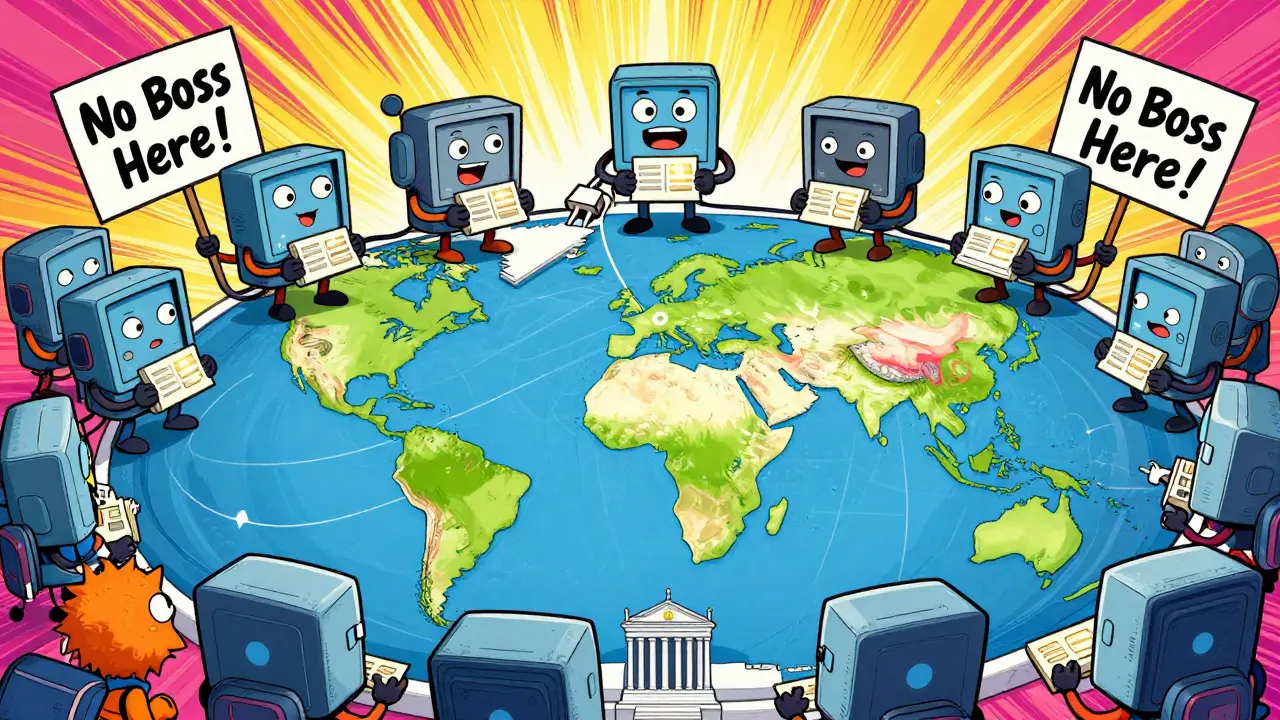
Public blockchains offer transparency and decentralization but struggle with speed, cost, and privacy. Bitcoin and Ethereum show both the power and limits of permissionless ledgers.