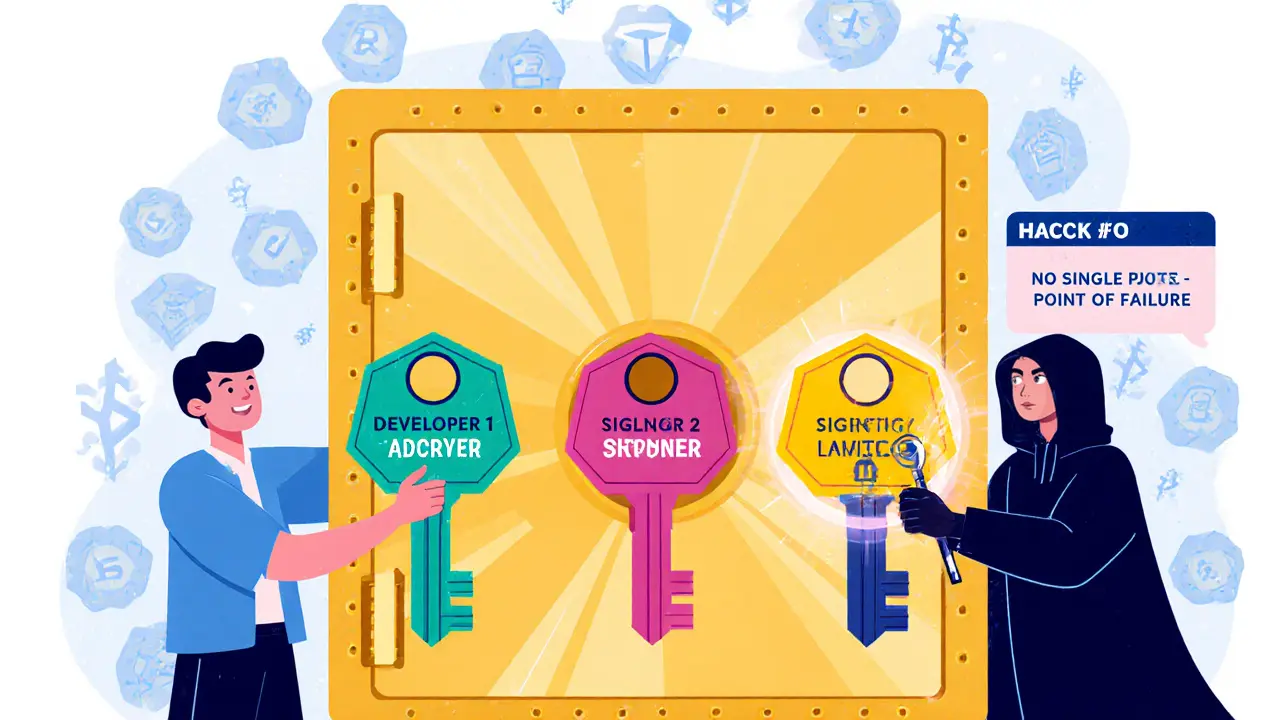
Multisignature Wallet: How It Keeps Your Crypto Safe
When you hold crypto, who really controls your money? A multisignature wallet, a type of crypto wallet that requires two or more private keys to authorize a transaction. Also known as multi-sig wallet, it’s not just a feature—it’s a security layer that stops single points of failure, whether from hacks, insider theft, or lost keys. Unlike regular wallets where one password or key unlocks everything, a multisignature wallet splits control. Think of it like a bank vault that needs two people to turn keys at the same time. If one key is stolen, the funds stay locked.
This isn’t theoretical. Real crypto teams use multi-sig for treasury management. Projects like smart contract security, the practice of writing and auditing code that handles digital assets without human intervention rely on multi-sig to prevent rogue developers from draining funds. Even exchanges and DAOs use it to require approval from multiple stakeholders before moving large sums. And if you’ve ever heard of a hack where a single employee stole millions? That’s what multi-sig was built to stop. It’s not about trust—it’s about design.
But here’s the catch: most users don’t set it up right. Some think adding a second key means they’re safe, but if both keys are stored on the same device or same cloud account, you’re just doubling your risk. True multi-sig means keys live in separate places—maybe one on a hardware wallet, another on a paper backup, and a third with a trusted friend. It’s not convenient, but safety never is. And if you’re using a wallet that calls itself "multi-sig" but only asks for one password? That’s not multi-sig. That’s marketing.
When you look at the posts below, you’ll see how this concept shows up in real cases—like exchange reviews where security gaps led to losses, or airdrop scams that tricked people into giving up control of their keys. You’ll also see how projects with weak custody practices end up dead or hacked. The pattern is clear: the best crypto projects don’t just have good code—they have good custody. And that starts with a properly configured multisignature wallet.
MultiSig wallets protect DAO treasuries by requiring multiple approvals for transactions, preventing hacks, reducing single points of failure, and meeting regulatory standards. Gnosis Safe leads adoption with 68% market share.