Advantages and Disadvantages of Public Blockchains Explained
Public blockchains offer transparency and decentralization but struggle with speed, cost, and privacy. Bitcoin and Ethereum show both the power and limits of permissionless ledgers.

Public blockchain, a distributed ledger that anyone can join, read, and write to without permission. Also known as open blockchain, it’s the backbone of Bitcoin, Ethereum, and most decentralized apps you interact with daily. Unlike private systems controlled by a single company, public blockchains let anyone verify transactions, track token movement, and run smart contracts without asking for approval. That’s not just tech jargon—it’s why people trust them with billions in value.
One major advantage is blockchain transparency, the ability for anyone to see every transaction on the network in real time. You don’t need to trust a bank or exchange—you can check the ledger yourself. That’s why scams like fake airdrops or dead exchanges (like CherrySwap or GSAE) get exposed fast. If a token has zero trading volume and no one can verify its activity, the public chain makes it obvious. No hidden books. No backroom deals.
blockchain security, the resilience of the network against tampering through cryptographic proof and distributed consensus is another big reason public chains dominate. Your funds aren’t safe because a company says so—they’re safe because thousands of computers around the world agree on what’s real. That’s why Norway can’t just shut down crypto mining by banning data centers: the network doesn’t live in one country. It lives everywhere. Even when Iran’s military steals power to mine crypto, the public chain keeps running. It doesn’t care about borders or regulations.
But public blockchains aren’t perfect. They’re slow. They’re expensive during hype cycles. That’s why state channels and Layer 2 solutions exist—to handle small payments off-chain while still using the public chain for final settlement. But even those rely on the public chain’s trustless foundation. You can’t have fast, cheap transactions without the public blockchain first proving they’re real.
And here’s what you’ll find in the posts below: real examples of public blockchain advantages—and failures. You’ll see how ICDex, a technically advanced DEX, collapsed because no one used it. How Uniswap v2 on Base thrives because it’s open, simple, and trusted. How scams like KTN or DogeMoon try to mimic legitimacy but fail under public scrutiny. How crypto tax rules in the US, India, and Egypt all depend on the fact that public blockchains leave a permanent, visible trail.
Public blockchains don’t promise riches. They promise truth. And in a world full of hype, fake airdrops, and ghost exchanges, that’s worth more than any token price.
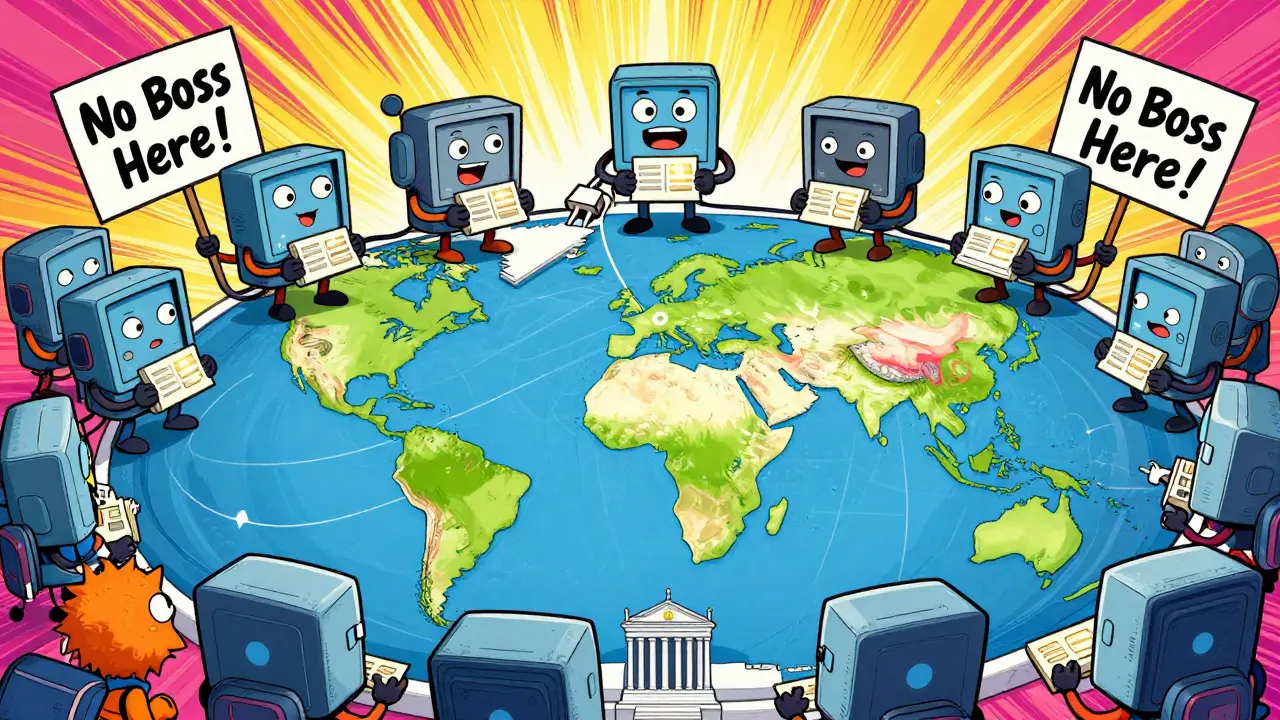
Public blockchains offer transparency and decentralization but struggle with speed, cost, and privacy. Bitcoin and Ethereum show both the power and limits of permissionless ledgers.