Is Crypto Regulated in India? Tax Rules, Legal Status, and What You Need to Know in 2025
Crypto is legal in India in 2025, but heavily taxed. Learn about the 30% crypto tax, 1% TDS, government tracking, and what you must report to avoid penalties.

When you buy or sell cryptocurrency in India, a crypto TDS India, a 1% tax deducted at source on crypto transactions under Indian income tax rules. Also known as Tax Deducted at Source on digital assets, it applies to every trade over ₹10,000 in a single financial year, whether you’re swapping tokens on a DEX or cashing out on an exchange. This isn’t a capital gains tax—it’s a withholding tax. That means the exchange or platform takes 1% off the top before you even see your money. No matter if you made a profit or took a loss, TDS still gets pulled.
Many traders assume TDS is just a formality, but it’s actually a major compliance tool. The Indian government uses it to track crypto activity across platforms like WazirX, CoinDCX, and even decentralized exchanges that have Indian users. If you’re moving crypto between wallets or swapping tokens on Uniswap v2 through a browser, and the platform reports to Indian authorities, TDS can still apply. This connects directly to crypto tax India, the broader legal framework requiring all crypto gains to be reported as income. It’s not optional. The IRS-style tracking tools used by Indian tax authorities now link wallet addresses to PAN cards, making it harder than ever to fly under the radar.
What’s often misunderstood is what triggers TDS. It’s not just buying Bitcoin with INR. Selling SOL for USDT? TDS. Swapping ETH for SHIB on a peer-to-peer platform that complies with Indian rules? TDS. Even receiving crypto as payment for services—like if you’re a freelancer paid in USDC—can count as a taxable event. This ties into TDS on crypto, the specific mechanism forcing platforms to act as tax collectors. The system is designed to catch everyone, even those who think they’re too small to matter. A ₹15,000 trade means ₹150 taken before you even touch your coins. Multiply that over a dozen trades a month, and you’re paying hundreds in TDS alone.
And here’s the catch: TDS isn’t the final tax. It’s just an advance payment. At the end of the year, you still need to calculate your actual capital gains or losses and file your return. If you paid ₹5,000 in TDS but your net profit was only ₹3,000, you can claim a refund. But if you didn’t keep records? Good luck proving it. That’s why crypto compliance India, the practice of tracking every transaction, keeping receipts, and filing accurate returns isn’t just smart—it’s survival. People who ignore this end up with notices, penalties, or worse.
What you’ll find below isn’t theory. These are real stories from Indian crypto users who got hit by TDS, got confused by exchange reports, or tried to dodge it and ended up in trouble. Some posts break down how to calculate your TDS liability. Others expose platforms that claim to be "TDS-free"—but aren’t. There’s also deep dives into how the rules changed in 2024, what happens if you use a foreign exchange, and how to prove your losses to the tax department. No fluff. No hype. Just what actually works when the government is watching every swap.
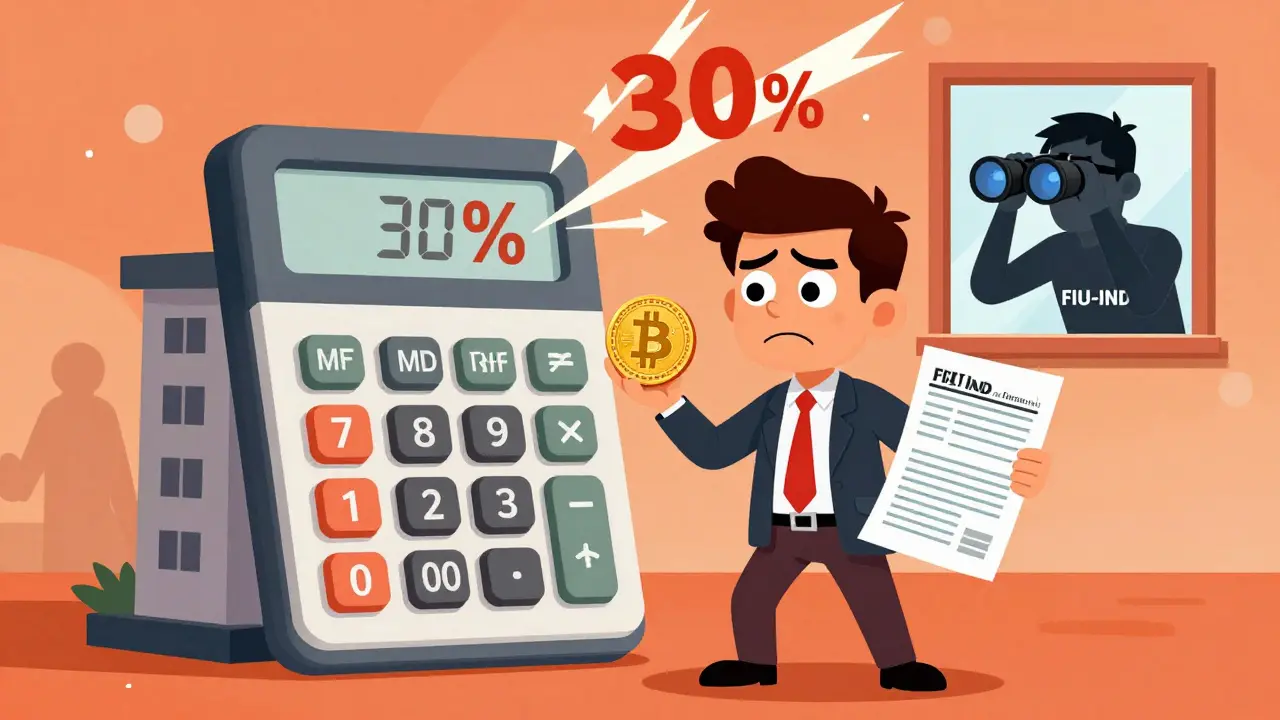
Crypto is legal in India in 2025, but heavily taxed. Learn about the 30% crypto tax, 1% TDS, government tracking, and what you must report to avoid penalties.