Norway renewable energy: How clean power drives crypto and global markets
When you think of Norway renewable energy, a system where over 98% of electricity comes from clean sources like hydropower, wind, and solar. Also known as Nordic clean energy, it’s not just about saving the planet—it’s becoming a hidden engine behind global crypto operations. Unlike countries that burn coal or gas to power data centers, Norway uses rivers and fjords to generate cheap, carbon-free electricity. That’s why crypto miners, blockchain firms, and even AI startups have moved in—low energy costs and stable grids make it a magnet for energy-hungry tech.
Hydropower is the backbone of this system. Dams built decades ago now supply power to server farms that run 24/7, mining Bitcoin or supporting decentralized exchanges. This isn’t theoretical—Norway hosts some of the largest crypto mining operations in Europe, quietly feeding into global networks. But it’s not just about mining. The same clean grid powers blockchain nodes, smart contract validators, and even decentralized finance (DeFi) infrastructure. And because Norway’s energy is so stable, it attracts firms that need reliability—not just low prices. Meanwhile, the country’s strict environmental rules mean these operations must prove they’re not draining the grid or harming ecosystems. That’s why most are built near existing hydropower plants, not in new locations.
What does this mean for you? If you’re tracking crypto markets, energy policy in Norway directly affects mining costs, which ripple into Bitcoin’s price and mining profitability worldwide. When Norway tightens its energy rules, miners move to Canada or Iceland. When it opens new permits, crypto activity spikes. It’s a quiet but powerful link between climate policy and digital finance. And while most people think of crypto as a tech story, it’s just as much an energy story—and Norway is at the center of it.
Below, you’ll find real-world analysis of how renewable energy shapes crypto infrastructure, where mining operations are actually located, and why some tokens thrive—or die—based on their energy footprint. No fluff. Just facts from the ground.
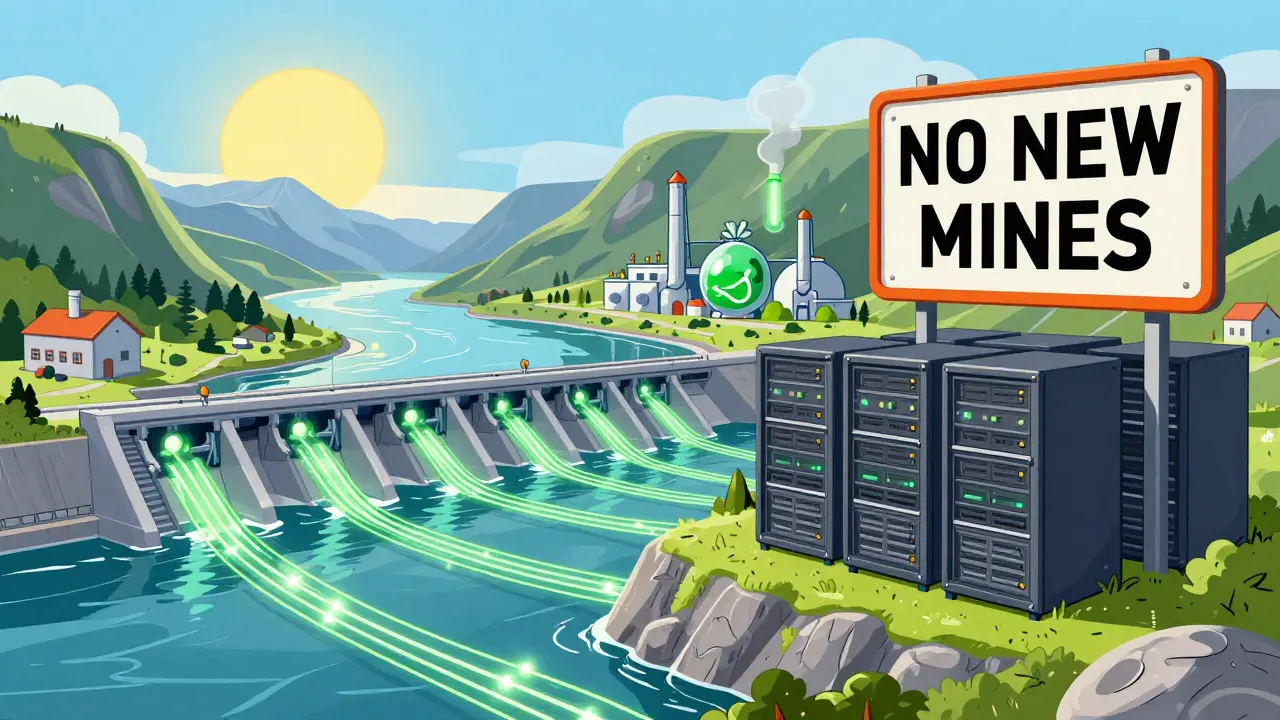
Norway is blocking new crypto mining data centers to protect its renewable energy for industries that create local jobs and economic value, not just global digital assets.