Advantages and Disadvantages of Public Blockchains Explained
Public blockchains offer transparency and decentralization but struggle with speed, cost, and privacy. Bitcoin and Ethereum show both the power and limits of permissionless ledgers.

When people talk about Ethereum blockchain, a decentralized platform that runs smart contracts and powers thousands of crypto applications. Also known as Ethereum network, it's not just a digital ledger—it's a global computer that runs without servers, CEOs, or shutdowns. Unlike Bitcoin, which mainly moves money, Ethereum lets developers build things—apps that lend, trade, gamble, or even simulate economies—all without needing a company in the middle.
That’s where smart contracts, self-executing code that automatically enforces rules when conditions are met come in. These aren’t legal documents—they’re lines of code on the Ethereum blockchain that handle payments, unlock NFTs, or distribute tokens when you meet a requirement. You don’t need to trust a bank or a CEO. You just need to trust the code, and the network that runs it. That’s why DeFi, a movement to replace banks with open, peer-to-peer financial tools built on blockchain lives on Ethereum. Over 70% of all DeFi apps run here because it’s the only network with enough developers, tools, and history to make it work at scale.
But Ethereum isn’t perfect. It’s slow and expensive during peak times, which is why projects like Uniswap v2 on Base or PartySwap still use it as a foundation but layer on faster networks to cut costs. You’ll see this pattern in the posts below—many projects either run on Ethereum directly, or build around its limitations. Some try to replace it. Others use it as the backbone. And a lot of scams? They pretend to be built on it, hoping you’ll trust the name.
What you’ll find here aren’t hype pieces. These are real reviews of platforms, tokens, and systems that either depend on Ethereum, misuse its name, or try to bypass it. You’ll see how a $94 daily volume exchange on Internet Computer compares to Uniswap on Base. You’ll learn why a token called HOLY or SCRAT can’t survive without real users—and why Ethereum’s open nature makes it both the most powerful and most exploited network in crypto. Whether you’re trying to avoid scams, understand why gas fees spike, or figure out why so many airdrops require you to hold ETH, this collection gives you the facts—not the marketing.
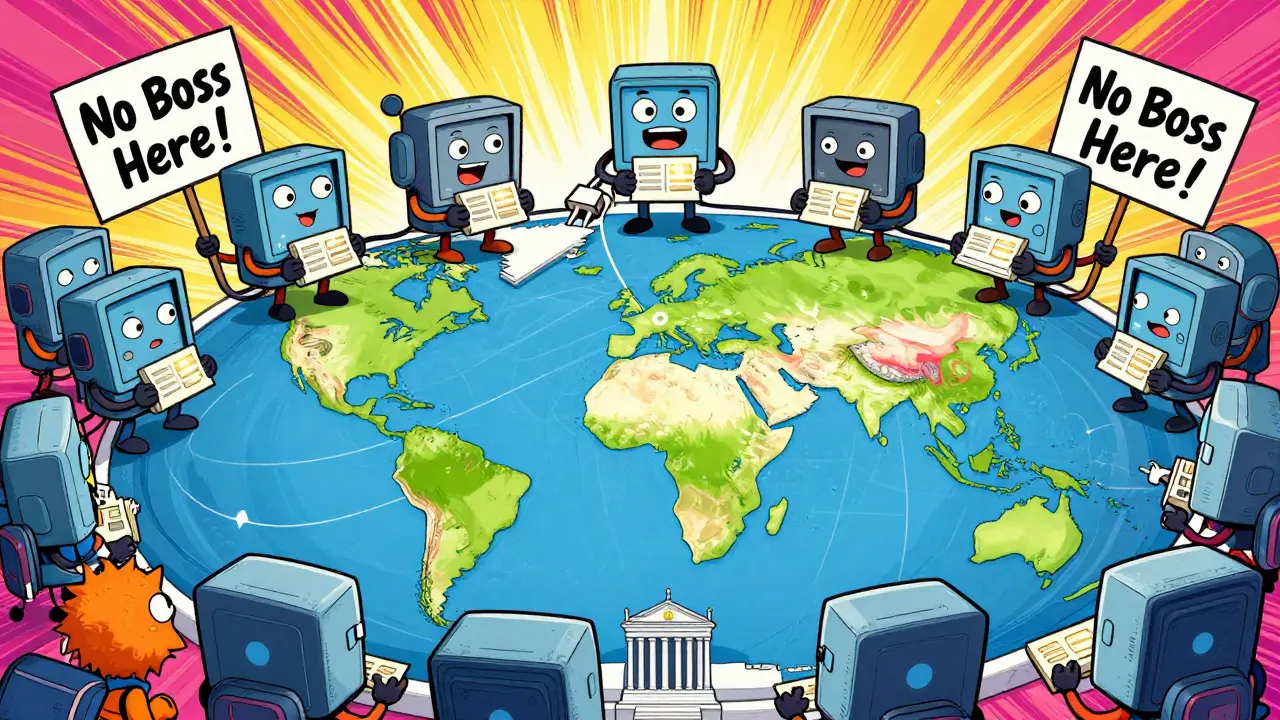
Public blockchains offer transparency and decentralization but struggle with speed, cost, and privacy. Bitcoin and Ethereum show both the power and limits of permissionless ledgers.