Golden Pact (GOT) Explained: How the Dual‑Gold Crypto Works
A clear, plain‑English guide explaining Golden Pact (GOT) crypto, its dual gold‑backed model, tokenomics, uses, risks and how it compares to other tokens.

When working with Algorithmic Non-Stablecoin, a cryptocurrency that adjusts its supply through code rather than pegging to any fiat currency. Also known as algorithmic token, it aims to preserve purchasing power by letting market forces and on‑chain rules drive the price.
This algorithmic non-stablecoin lives inside the broader DeFi, decentralized finance ecosystems where lending, swapping and yield generation happen without intermediaries. In practice, DeFi platforms provide the liquidity pools and market depth that let algorithmic mechanisms react quickly to demand spikes. Without a trusted collateral reserve, the token’s stability hinges on well‑designed Tokenomics, the economic model that defines supply schedules, incentives and distribution rules.
Three core ideas connect these entities: Algorithmic Non-Stablecoin employs supply‑adjustment algorithms, Tokenomics requires incentive‑aligned governance, and DeFi platforms enable real‑time market feedback. Together they form a feedback loop where smart contracts mint or burn tokens based on price or liquidity metrics, users vote on parameter tweaks, and exchanges instantly reflect the new supply.
First, the supply algorithm. Most projects use a rebasing model: if the token trades above a target price, the contract expands supply; if below, it contracts. This creates a direct link between price and circulating quantity. Second, the incentive layer. Stakers, miners or liquidity providers earn rewards that compensate for dilution when supply expands. Properly aligned incentives keep participants honest and active. Third, the governance module. Token holders can propose changes to the rebase frequency, target price or reward rates, typically via on‑chain voting.
Because there’s no collateral backing, credibility comes from transparency and code auditability. Audited smart contracts let anyone verify the exact rules, while open‑source repositories let developers spot flaws early. Projects that publish clear economic dashboards and real‑time metrics tend to inspire more trust, which in turn attracts deeper liquidity on DEXs.
Risk management is another essential piece. Without a reserve, a sudden loss of confidence can trigger a death spiral: supply expands, price falls further, more expansion follows. Designers mitigate this by adding circuit‑breaker thresholds, progressive rebase rates, or hybrid models that combine partial collateral with algorithmic control. Understanding these safeguards is crucial before allocating capital.
From a developer’s perspective, building an algorithmic non-stablecoin means mastering smart‑contract languages (Solidity or Vyper), integrating price oracles, and configuring governance frameworks like Snapshot or Governor‑Bravo. Testing on testnets, running simulations of extreme market moves, and stress‑testing the rebase logic are non‑negotiable steps.
For traders, the appeal lies in speculative upside and the chance to earn rebase rewards. However, the volatility can be higher than traditional stablecoins, so position sizing and stop‑loss strategies matter. Tracking on‑chain metrics—such as total supply growth, holder concentration and rebase frequency—gives a practical edge.
Regulators are still figuring out how to classify these assets. Because they don’t claim a fiat peg, many jurisdictions treat them as utility tokens, but the dynamic supply can raise questions about securities law. Keeping an eye on regulatory updates helps avoid unexpected compliance hurdles.
In short, algorithmic non-stablecoins sit at the intersection of advanced tokenomics, community‑driven governance, and the fast‑moving world of DeFi. They showcase how code can replace traditional collateral while still trying to offer price stability. The next sections below dive into real‑world examples, recent regulatory shifts, and how you can safely explore this innovative space.
Below you’ll find a curated set of articles that break down everything from the math behind supply algorithms to practical guides on participating in governance votes. Whether you’re a developer, investor, or just curious about the future of crypto money, these resources give you the context you need to navigate algorithmic non‑stablecoins confidently.
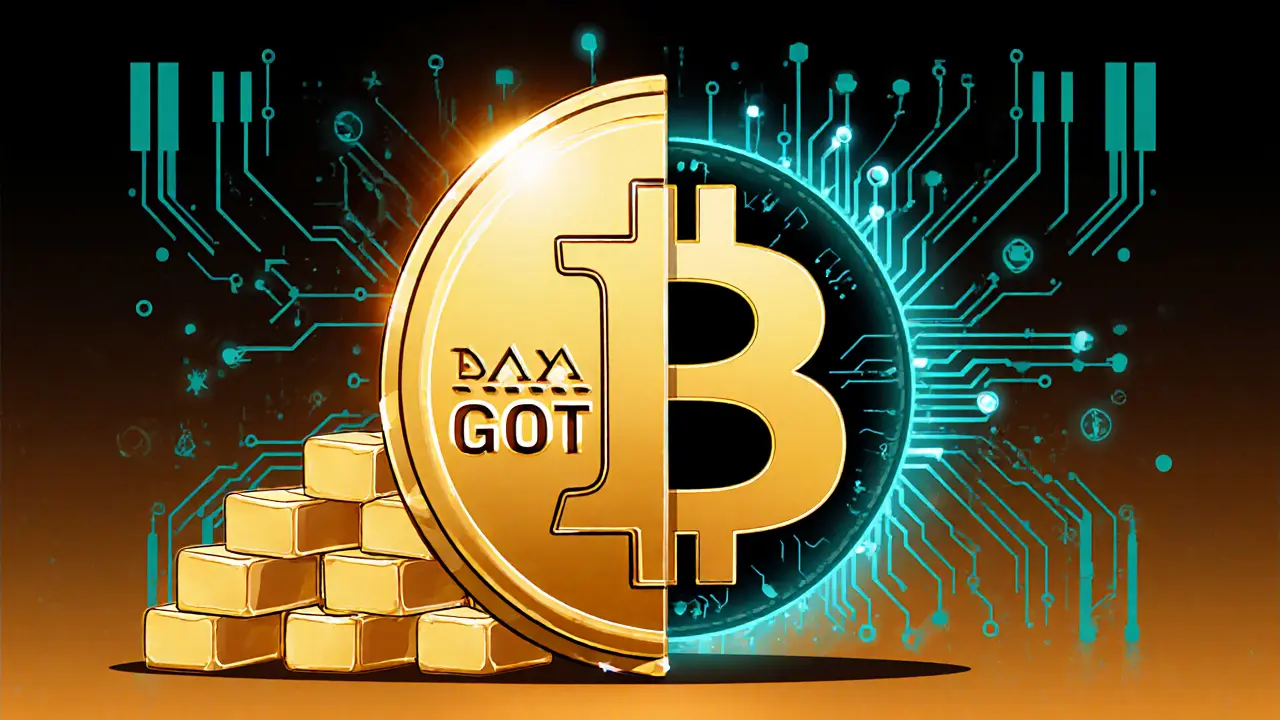
A clear, plain‑English guide explaining Golden Pact (GOT) crypto, its dual gold‑backed model, tokenomics, uses, risks and how it compares to other tokens.